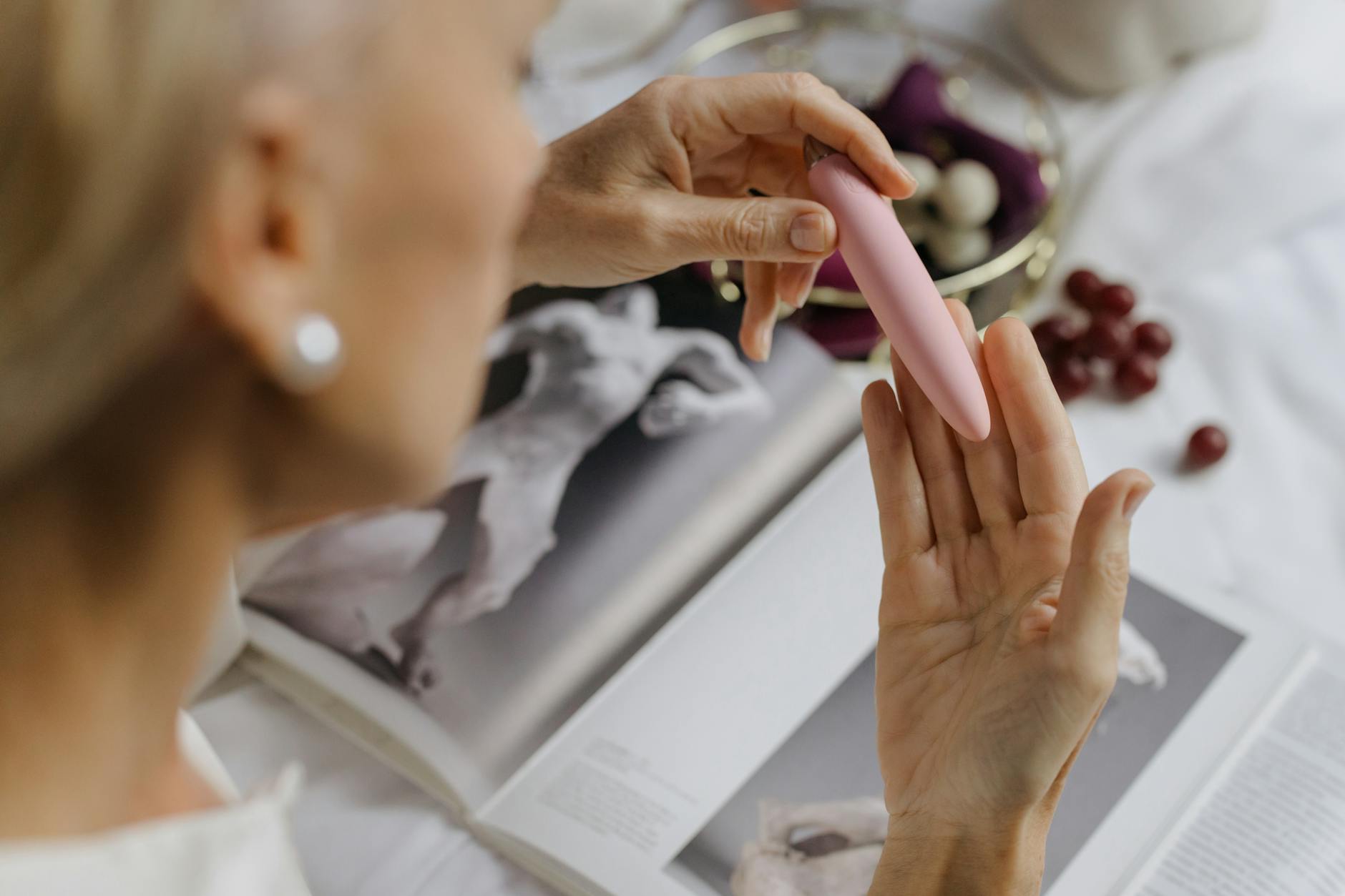
Let's talk about the touch that doesn't feel good
Sometimes your own hands feel like too much. Not always. Not even most of the time. But when it matters, when you're alone and trying to reconnect with your body, suddenly direct contact feels too intense, too raw, or weirdly triggering. Maybe it's residual tension from past experience. Maybe it's anxiety that gets louder the moment you slow down. Maybe it's just that the pressure of your fingers feels unpredictable in a way that makes your nervous system tense up instead of open up.
If that's you, you're not broken. And you're not alone. What you're experiencing is sensory overload, and it's incredibly common. The good news: lemon vibrators, especially air-pulse models like the Lem, work differently than your hands do, and that difference is often exactly what people need.
Why hands sometimes don't work anymore
Here's what happens physiologically when direct touch triggers overwhelm. Your nervous system has a bandwidth for stimulation. When you're anxious, stressed, or recovering from trauma, that bandwidth narrows. A partner's touch might feel okay because there's emotional context around it. Your own touch, though, can feel clinical, or desperate, or loaded with judgment that makes your body tense up defensively.
Direct pressure from fingers also requires sustained attention. You're thinking about pressure, angle, speed, whether you're "doing it right." That cognitive load can pull you out of sensation entirely. You end up performing pleasure instead of feeling it.
Finally, there's the issue of predictability. Hands vary. Pressure shifts. Your nervous system never quite knows what's coming next, and for people with a history of boundary violations, that unpredictability alone can trigger a shutdown response.
Why air-pulse vibrators feel less overwhelming
Air-pulse technology, which lemon clitoral vibrators use, works on suction and pulsing rather than direct percussion. This matters. A lot.
First, it creates consistent stimulation without sharp pressure. The suction sensation feels more like a rhythmic wave than a pushing force. For people whose nervous systems are on high alert, consistency is calming. You know what to expect, and your body can relax into that predictability.
Second, suction stimulates the nerve endings around the clitoral area without requiring you to be perfectly positioned. Your fingers need precision. The Lem doesn't. You can move slightly, shift your weight, adjust without losing the sensation. That freedom is quietly transformative.
Third, there's psychological distance. It's not your hands. Your hands carry all the emotional weight of self-touch. A tool feels more neutral, more permissive. Some people find that psychological separation is the permission they need to let pleasure happen.
The spectrum of sensory tolerance
Not every lemon vibrator works the same way for every person. The ones on lower settings tend to feel less intense, which matters when you're rebuilding tolerance.
The Lem has multiple intensity levels. Starting at pattern one or two creates a gentle pulsing that doesn't feel jarring. You're not committed to full intensity. You can stay in the gentlest range for weeks or months while your nervous system acclimates. That gradual approach is how many people rebuild their relationship with solo pleasure.
Water-based lube helps too, even if you don't think you need it. A thin layer reduces friction and makes the suction sensation feel smoother, less grabby. It's one small variable you can control.
The confidence piece
When touching yourself has felt wrong or overwhelming, the first time you try again, you're carrying that whole history. You're not just experiencing sensation. You're managing anxiety, memories, self-judgment. That's heavy.
Using a device instead of your hands lets you separate "me" from "what I'm doing to myself." It sounds subtle, but it changes everything. You're not performing self-touch. You're using a tool. That reframe is often the difference between shutdown and openness.
Many people find that after a few weeks of using gentler vibrators, their tolerance for their own touch increases. Something about permission, consistency, and pleasure happening without internal judgment makes it easier to reclaim your hands later. But there's zero pressure to rush that. Some people prefer clitoral vibrators permanently, and that's completely valid.
Timing, pacing, and no pressure
Here's what I recommend to people rebuilding confidence. Set aside time, but don't make it a test. The goal is not orgasm. The goal is sensation without shutdown.
Use the lowest setting. Spend 10 minutes exploring what pulsing feels like, where it feels good, whether intensity needs to change. If it doesn't feel good, stop. Don't push through. Your nervous system is telling you something useful.
If you can get to 20 or 30 minutes of gentle stimulation without anxiety spiking, that's a win. If orgasm happens, great. If it doesn't, also great. The point is building evidence that your body can experience pleasure without you disappearing into fear.
When you're used to overwhelming sensations or touching yourself feeling forbidden, even neutral pleasure is a reset.
Partnered context matters too
If you have a partner, they might worry that preferring a lemon vibrator means something is wrong between you. It doesn't. Solo pleasure with a clitoral vibrator is completely separate from partnered intimacy. Some people find that using air-pulse devices solo actually helps them feel more connected during partnered sex, because they've rebuilt their relationship with pleasure as something that belongs to them.
You can also use a lemon clitoral vibrator together. Some couples find that the consistency and gentleness makes partnered pleasure feel less performance-oriented. If your partner is also anxious about touch, the vibrator becomes a third thing to focus on together instead of each other's pressure and expectations.
When to expand, when to stay gentle
After a few weeks or months of gentle use, you might notice that lower settings feel almost sleepy. That's your signal that you're ready to try a slightly higher pattern. Or not. Some people stay at setting one indefinitely, and their pleasure is incredible. There's no graduation requirement.
If you hit a ceiling where intensity isn't building pleasure anymore, that's actually useful information. It might mean you're tense, or tired, or mentally checked out. It's not a signal to push harder. It's a signal to stop, rest, and try again when your nervous system is more available.
The bigger picture
When self-touch has felt wrong or overwhelming, rebuilding that relationship takes time. Lemon vibrators, with their gentle, consistent stimulation, make that path feel safer and more accessible. You're not fighting your own hands. You're not managing unpredictability. You're just experiencing sensation in a format your nervous system can tolerate.
Your pleasure matters. And the way you get there, the tools you use, the pace you set. Those all matter too. If a clitoral vibrator helps you feel safe enough to reclaim pleasure that anxiety or history has stolen, that's not a compromise. That's you taking your body back.
People also ask
Can using a lemon vibrator make my own touch feel even worse?
It shouldn't. If anything, it usually works in the opposite direction. After a few weeks of gentle, consistent stimulation from a device, your nervous system often becomes less reactive to your own touch because you've had evidence that pleasure can happen without threat. That said, if at any point vibrator use starts feeling obligatory or pressured, pause. Your body knows what it needs.
What if I can't feel sensations from an air-pulse vibrator either?
That's actually important information. Numbness or lack of sensation can happen for several reasons: anxiety that's dampening your entire nervous system, medication side effects (like certain antidepressants), or just needing more time to acclimatize. Start with the highest setting if low settings feel like nothing. Also, try it when you're most relaxed, maybe in the evening after a bath. And if numbness persists, it's worth chatting with a healthcare provider, especially if you're on medication. Sometimes adjusting timing or dosage helps. Read more about how to use a lemon vibrator when sensation feels numb or muted for deeper strategies.
Is it normal to need lube with an air-pulse vibrator?
Completely normal. Even though suction doesn't require the friction that traditional vibrators do, a thin layer of water-based lube makes the sensation feel less grabby and more gliding. It also protects your tissue from any minor irritation if you're using the vibrator regularly. Silicone-based lubes will damage silicone toys, so stick to water-based options with Hello Nancy products.
How long should my first session with a lemon clitoral vibrator be?
There's no rule. Some people feel overwhelmed after five minutes. Others comfortably go 30. Start with whatever feels manageable, maybe 10 minutes, and notice how your body responds. If you feel relaxed and open afterward, you nailed it. If you feel tense or disconnected, that's data too. You might need to shorten it, use a lower setting, or try again when you're in a different headspace. Pleasure isn't about duration.
Will using a vibrator make it harder to have orgasms without one?
This is one of the biggest myths. Using a clitoral vibrator doesn't rewire your body or make you dependent. Some people find they have more orgasms overall once they've rebuilt confidence with solo pleasure. Others prefer vibrators consistently, and that's fine too. Your body has the same nerve endings and capacity whether or not you use a tool. What changes is your relationship with pleasure, not your physiology.
What if my anxiety comes back during solo time?
It probably will, sometimes. That's normal. When anxiety spikes, pause. You don't have to push through. Take a breath. Maybe try again in a few hours, or the next day. Forcing pleasure when your nervous system is in fight-or-flight mode doesn't work. Gentleness and patience do. Over time, as you accumulate evidence that your body is safe, those anxious moments become shorter and less intense. Progress isn't linear, but it moves in a direction if you keep showing up.
What comes next
Rebuilding pleasure after it's felt unsafe or overwhelming is real work. It takes patience, and it's worth it. A lemon vibrator, with its gentle, predictable sensation, often becomes the bridge back to a relationship with your own body that feels good instead of fraught. If you're ready to explore that path, you deserve a tool that matches your nervous system's pace. That's what Hello Nancy products are designed for. If you have questions about which vibrator might work best for your situation, reach out at /contact. You don't have to figure this out alone.