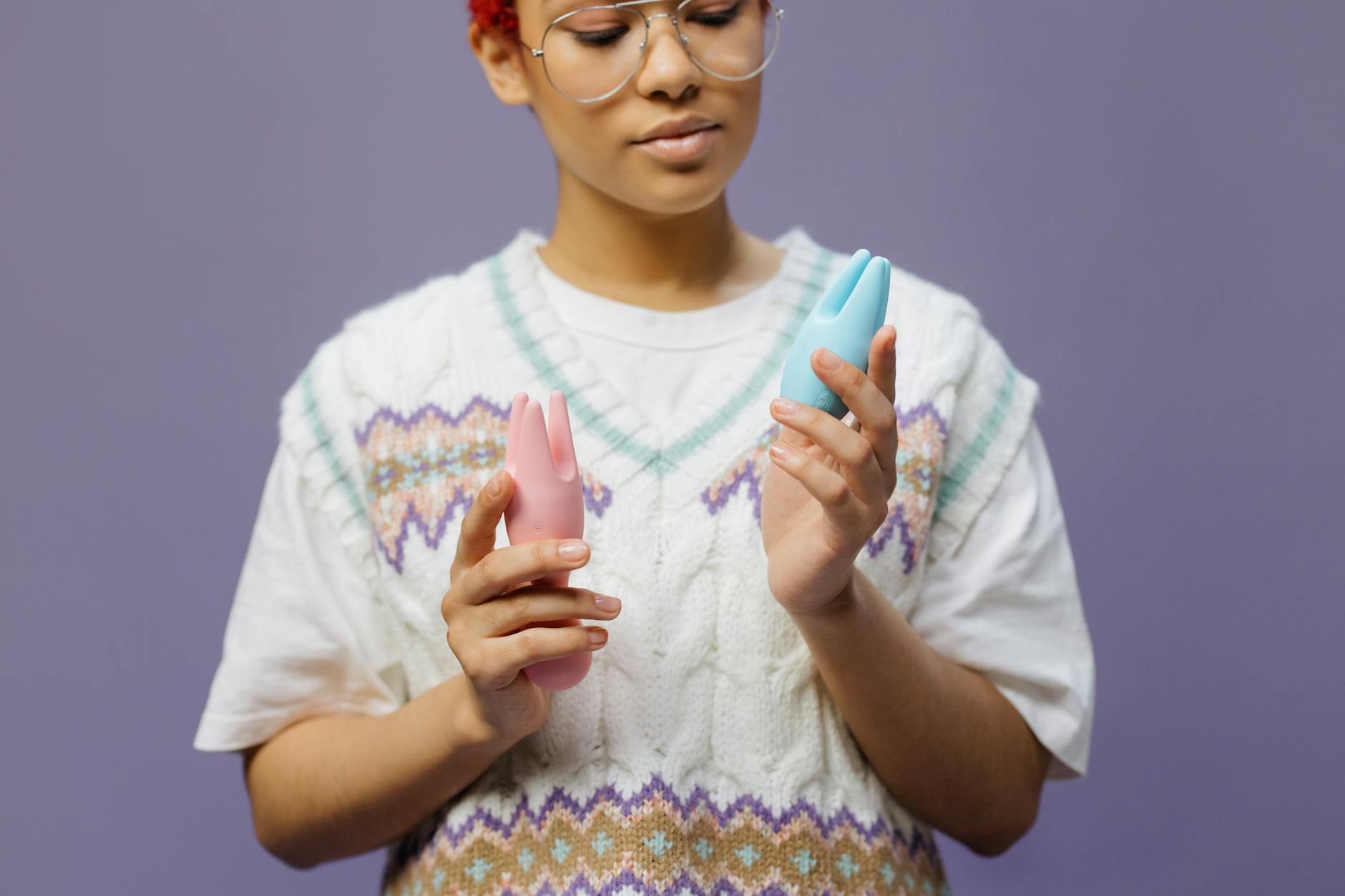
How to Use a Lemon Vibrator When Your Partner Has Low Libido
Let's be real. You and your partner want sex, but not always at the same time. Sometimes they want it less often than you do. Or they want it differently. Or they've stopped wanting it altogether for a while.
This is one of the most common relationship problems no one talks about. And here's the thing: your pleasure doesn't have to wait for theirs to catch up.
The mismatch is normal. The suffering is optional.
One partner typically has higher desire than the other. That's not a sign your relationship is broken. It's just statistics. What matters is how you both handle it.
Most couples try one of two dead-end solutions. Either the higher-desire partner suppresses their needs (which builds resentment quietly), or they pressure the lower-desire partner (which makes sex feel obligatory, which tanks their desire further). Both are traps.
A lemon clitoral vibrator like the Lem opens a third door. It's not a replacement for partnered sex. It's a way to own your pleasure independently, which actually makes reconnection easier, not harder.
Why desire mismatch happens in the first place
There are usually three layers beneath low libido in a relationship.
The physical layer. Your partner might have hormonal shifts, medication side effects, fatigue, or genuinely lower baseline desire. This is nobody's fault. It's just biology.
The emotional layer. Sometimes the lower-desire partner is hurt, stressed, disconnected, or dealing with resentment they haven't voiced. Sometimes they're burned out from work or parenting. Sometimes they've internalized shame about sex. These are fixable, but not by having more sex.
The relational layer. You and your partner might have fallen into a pattern where sex feels like obligation for them (which kills arousal) or rejection for you (which builds anxiety). The longer this cycle runs, the harder it is to break.
A lemon vibrator doesn't fix the emotional or relational layer. But it does stop the physical pattern from poisoning the whole relationship.
Why a clitoral vibrator works when desire is mismatched
Here's what I see in my practice. When the lower-desire partner knows their higher-desire partner is getting pleasure somewhere, it removes the pressure they feel to perform. It's counterintuitive, but lowering the stakes often increases interest.
You're no longer waiting for them to be aroused. You're not watching them struggle to stay engaged. You're taking care of your own body, which is hot to watch and less stressful to be around.
Air-suction toys like the Lem are particularly good for this dynamic because they create sensation without requiring constant partner engagement. You can use them alone, with your partner watching, or while they're in the same room not watching. The flexibility is the whole point.
Starting the conversation before you start the toy
This is the step most people skip, and it's the most important one.
Don't spring a lemon vibrator on your partner and hope they'll understand. Have a conversation first. Not a big production. Just honesty.
"I've been feeling disconnected from my own pleasure, and I want to change that. I'm thinking about exploring what helps me feel good on my own. I'm not trying to replace us. I'm trying to feel better in my body so I have more to bring to us."
That's the premise. You're not accusing them. You're not demanding more sex. You're just claiming your right to feel good.
If your partner is worried you're trying to replace them, that fear is real and it matters. Reassure them. "You're my person. This is just about me being less frustrated and more present."
If they're uncomfortable with toys, that's worth a separate conversation. Some of that discomfort softens with time and education. Some of it doesn't, and you work around it.
How to use a lemon clitoral vibrator when your partner isn't matching your desire
There are three main scenarios.
Scenario one: Solo use to release pressure. You get off on your own, regularly, without waiting for your partner to be in the mood. A lemon vibrator takes 10-15 minutes. It's faster than partnered sex, it requires nothing from them, and it gives your nervous system what it needs. This alone changes the energy in the relationship. You're not frustrated. You're not resentful. You're just you, satisfied.
Scenario two: Your partner is present but not actively involved. They're in the room. Maybe they're reading. Maybe they're watching. You use the Lem while they do their thing. This is low-pressure exposure for them. They see that toys are normal. They see you in pleasure. They're not required to perform. Over time, this often makes them more curious, not less.
Scenario three: Your partner gets involved. They use the toy on you, or you use it while they touch you elsewhere, or you build something together that includes the vibrator. This is real partnered intimacy without depending on their baseline arousal. They don't have to be internally turned on to create a good experience for you.
What settings work best when you're feeling disconnected
When desire mismatch has been running for a while, your own arousal can feel fragile. You might worry you can't finish, or you might be touching yourself mechanically without much sensation.
Start low. The Lem has multiple intensity levels. Begin on 1 or 2. Spend time just feeling it. Don't rush to orgasm. The point is to reconnect with your own pleasure, not to cross a finish line.
Many people find that after weeks of using a lemon vibrator regularly, their baseline arousal increases. You stop approaching sex from a place of scarcity and start from a place of "I already feel good and I want to feel good with my person too."
When to get professional help
If the desire gap is caused by depression, hormonal issues, or medication side effects, therapy or medical intervention can help. If it's caused by emotional disconnection or unprocessed resentment, couples work helps. A good couples therapist can address what's actually beneath the low libido instead of just adding pressure for more sex.
A toy is not a substitute for addressing real relationship problems. But it does buy you time and space while you figure out what those problems actually are.
The weird thing that often happens
After a few months of you consistently using a lemon vibrator and feeling satisfied in your own body, your partner's desire sometimes starts shifting. Not always. But often.
Why? Because desire is contagious. When you're not desperate for them, you become more attractive to them. When you're not resentful, there's less friction. When you're in your own pleasure, they feel safer to explore theirs.
I've worked with many couples where the lower-desire partner became more interested once the higher-desire partner stopped performing desperation. It doesn't always work out that way, but it's more common than you'd think.
Keep your own pleasure non-negotiable
Here's what I want you to remember. Your body deserves pleasure. Your partner's low libido is real and valid. Both of those things are true at the same time.
Using a lemon clitoral vibrator isn't a compromise. It's not settling. It's you saying, "I'm not waiting for permission to feel good." That's not selfish. That's healthy.
Your pleasure matters. Full stop. And taking care of it might be the thing that saves your relationship, because it stops the resentment before it starts.
People also ask
Will using a vibrator make my partner feel like I don't want them anymore?
Not if you handle the conversation well beforehand. Be clear that you're doing this for you, not against them. Many partners find that watching their partner experience pleasure, even with a toy, actually draws them closer. The vulnerability of it can be connecting.
Can I use a lemon vibrator while my partner is in the room but not interested in sex?
Yes. This is actually a good way to normalize toys in your relationship and let your partner see that you're taking care of your own needs. It removes the pressure on them to perform. Over time, many partners become curious or interested in watching.
What if my partner is uncomfortable with me using toys?
That's worth a real conversation. Ask them specifically what bothers them about it. Is it insecurity? Shame about sexuality? Worry that it's unnatural? Understanding the real concern helps you address it. Sometimes reassurance helps. Sometimes it takes time. Sometimes you need a couples therapist to work through it together. But your right to pleasure doesn't vanish because your partner is uncomfortable.
How often should I use a clitoral vibrator if my partner isn't interested in sex regularly?
As often as your body wants. Once a week, three times a week, daily. There's no wrong answer. Some people use the Lem as a stress relief tool like a gym session. Others use it when they feel their desire starting to tank and need to reconnect with sensation. Listen to what your body needs.
Does using a vibrator on my own make partnered sex feel less exciting?
Actually, the opposite often happens. Solo pleasure and partnered pleasure are different animals. Using a lemon vibrator on your own teaches you what you like, which makes partnered sex more interesting because you know what to ask for. It also keeps your nervous system happy, which makes you more present with your partner.
What if the desire mismatch is the other way around (my partner wants more sex than I do)?
The same principles apply, just flipped. If your partner is using a clitoral vibrator because you have lower desire, that's them taking care of their own body. You don't have to be involved. You don't have to feel threatened. And you might find that your own desire increases when the pressure is off. But if the mismatch is serious and causing real tension, couples therapy is worth considering.
Final thought
Desire mismatch is one of the loneliest problems in relationships because nobody talks about it. You feel like you're the only one struggling. You're not. And you don't have to choose between your pleasure and your partnership.
A lemon vibrator is a tool for that. It says: I love you, and I also love myself. Both of those things can be true. And when they are, the relationship actually gets stronger.
If you want to talk through relationship dynamics around pleasure and desire, reach out to us. We're here to help.