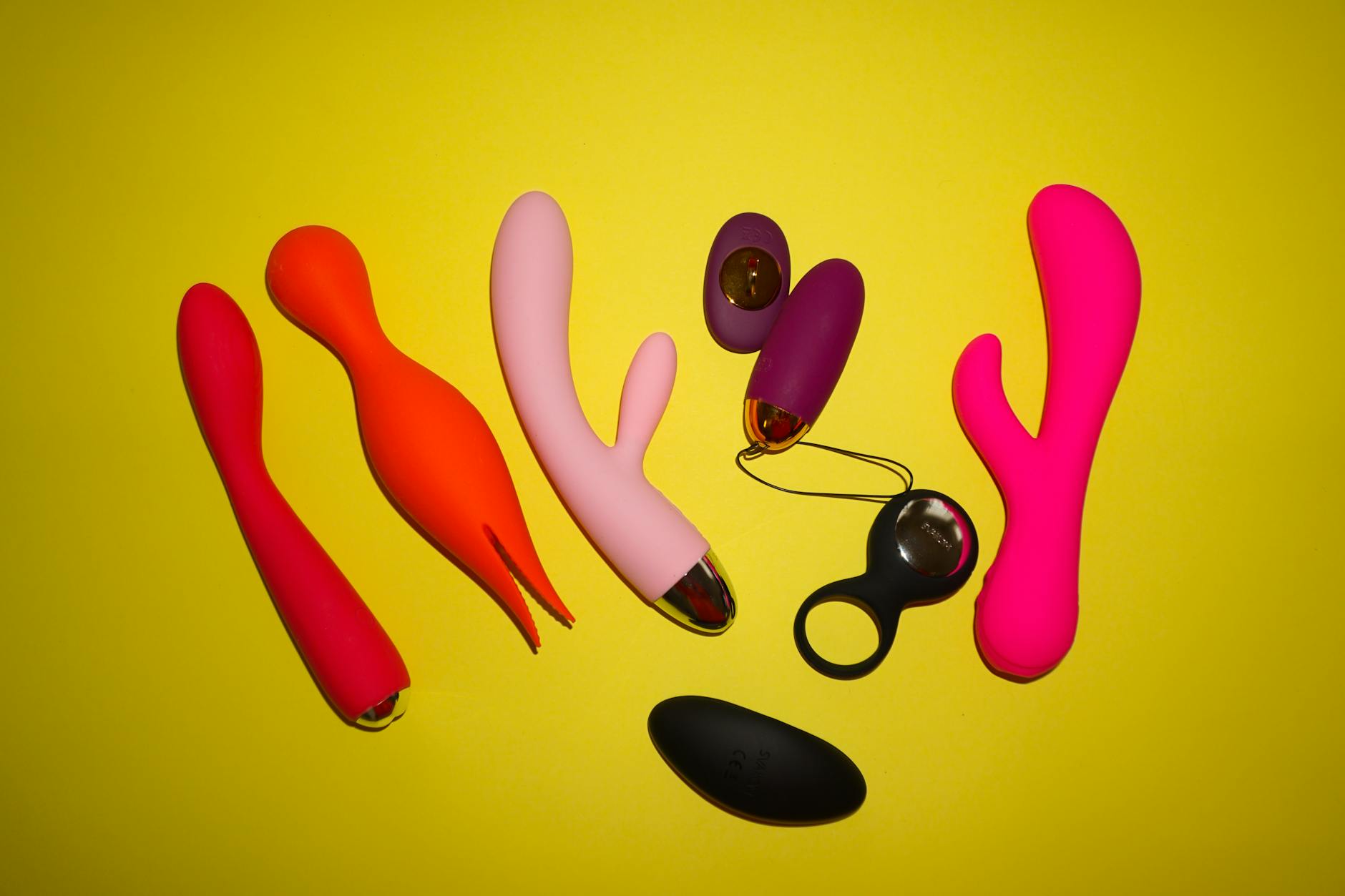
Let's be real about desire mismatch
One partner wants to feel a vibrator. The other wants skin, penetration, or the specific rhythm only their hands can deliver. This isn't incompatibility. It's just... different blueprints for pleasure. The trap is treating it like someone needs to compromise their way down to nothing.
Here's what actually works: integration, not sacrifice. A lemon vibrator isn't a replacement for what your partner loves. It's a third presence in the room. And when you frame it that way, everything changes.
The real block isn't logistics, it's permission
Most couples I work with who struggle with toy integration aren't actually stuck on mechanics. They're stuck on meaning. "If you need a vibrator, does that mean I'm not enough?" Or from the other side: "Why does your pleasure need batteries when mine doesn't?"
Those questions sit underneath a lot of resentment, and they're worth naming before you even open the box.
Here's the truth: a lemon clitoral vibrator stimulates your clitoris in a way no finger, tongue, or penis can. That's physics, not rejection. Your partner's preferred forms of stimulation feel good in entirely different ways. They're not competing. They're separate.
If your partner feels threatened by a vibrator, the conversation isn't about the toy. It's about reassurance. Something like: "I want you inside me and I also want this. Both matter. Neither replaces the other."
What integration actually looks like
Depending on what your partner prefers, here are the clearest patterns:
If they prefer penetration
Use your lemon vibrator on your clitoris while they penetrate you. Seriously, that's it. The vibration actually makes many people feel penetration more intensely. You're not replacing their involvement. You're amplifying what's already happening.
Timing: spend the first 10-15 minutes on foreplay together. Then, as things progress, introduce the vibrator. If you're the penetrating partner, let your partner run the vibrator. That keeps you both in control.
Patterns that work: start on pattern 1 or 2. The lower intensities pair better with penetration because you're getting dual input. Many people find that medium-intensity vibration plus movement creates a kind of feedback loop. You're more present, not less.
If they prefer manual stimulation
This one requires the most finesse because hands-on feels personal in a way batteries don't. But here's the key: don't frame it as "vibrator instead of your hands." Frame it as "your hands plus vibrator."
Try this: they use their hands first. Build arousal manually. Then, as you get closer to orgasm, bring in the lemon vibrator. They can hold it with you, guide it, or step back and watch. Some partners love the handoff moment. It feels collaborative instead of replacing.
Other angles: they use the vibrator on you while you touch them. Or they use it on themselves while you're with them. The point is, it's not solo performance. You're both generating the moment.
If they prefer specific rhythm or pressure
This is the one where resentment hides. "I know exactly what you like and I can give it to you." Yes. And a lemon vibrator can't replicate your particular touch. But it can offer something adjacent. Different, not worse.
The move here is non-defensive: "I love what you do. I also want to feel vibration sometimes. Can we find a version where both happen?" Maybe that means you use the vibrator while they do other things. Maybe they use it while you're inside them or touching them elsewhere.
The key is removing the idea that one pleasure invalidates the other.
How to introduce it without awkwardness
Timing matters. Don't spring a vibrator on someone mid-sex for the first time. Have the conversation outside the bedroom.
Something like: "I want to try using a vibrator when we're together. Not instead of you. With you. What feels okay to you?"
Listen for the actual worry underneath the "no" or the hesitation. Sometimes it's "I feel judged." Sometimes it's "I don't know where I fit." Sometimes it's "I'm scared it'll make me feel like I'm not enough." Each one gets a different response.
If your partner says yes but seems uncertain, start small. Use it for 2-3 minutes at the end of sex, not the whole time. Let them see that you still want them, you're still present, you're just also getting something additional.
If your partner says no, try asking why. Is it a hard boundary or a fear? Those need different conversations. A boundary means you respect it and find other ways to get what you need. A fear means you've got something to work through together.
The language that actually helps
Avoid: "You're not enough for me." "I need this to get off." "Other people use toys." All of these push your partner into defensiveness.
Try: "I want to feel this specific sensation and it's something I can't get any other way." "I want you to experience what this feels like with me." "Can we try this together?"
The difference is subtle but crucial. You're describing what you want, not what they're lacking. You're inviting collaboration, not issuing a correction.
One more thing: if your partner is hesitant, don't perform excitement about the vibrator. Don't act like it's the answer to everything. You want them to feel like you're exploring something together, not that they've been replaced by a better option.
What to actually do with the toy once you've got consent
Start outside the main event. Use your lemon vibrator during solo time or foreplay. Let your partner see that you're not dependent on it. You enjoy it, but it's optional, not urgent.
When you do integrate it: start with lower patterns. Introduce it midway through sex, not at the beginning. Some people pair it with penetration. Others use it while their partner is elsewhere on their body. There's no rule.
If intensity feels like too much during partnered sex, drop to pattern 1 or 2. The vibration is meant to enhance, not override, what's already happening. You want it noticeable but not distracting from your partner's involvement.
Here's a practical detail many couples skip: have the conversation about what happens if you want to come while they're inside you or near you but not directly involved. Some partners find that incredibly hot. Others feel sidelined. You won't know until you ask.
When it's about more than just sensation
Sometimes the resistance to toys isn't about the toy. It's about what toys represent. Independence. Self-knowledge. The fact that you've thought about your pleasure enough to get yourself something specialized.
That can feel threatening if your partner's identity is wrapped up in being your only source of pleasure. In a healthy relationship, that identity needs to shift anyway. You're allowed to know yourself. You're allowed to want things. Your partner's job isn't to be everything. It's to be willing to explore with you.
If your partner absolutely refuses, that's worth examining. Not because they're wrong, but because refusal to engage with something that matters to you is data. It tells you something about how they handle desires that don't match their own. That's a relationship question, not a vibrator question.
The integration that sticks
Couples who use lemon vibrators together successfully aren't using them despite their partner's preferences. They're using them alongside them. The penetration still happens. The hands still touch. The vibrator just adds texture.
Over time, most partners stop noticing it as a separate thing. It just becomes part of the rhythm. You use it sometimes, you don't other times. No one's keeping score.
The point is: your pleasure and your partner's preferred form of stimulation aren't enemies. They're just different. When you can sit with that difference without needing someone to back down, everything opens up.
People also ask
Can you use a clitoral vibrator while your partner is inside you?
Yes, absolutely. Many people find that clitoral vibration during penetration actually intensifies the sensation of penetration. Start on a lower pattern so the dual input doesn't feel overwhelming. Most partners find it makes you more responsive and present, which they typically enjoy. The vibrator doesn't replace what they're doing. It amplifies it.
What if your partner feels emasculated by a vibrator?
That's worth a direct conversation outside the bedroom. Something like: "I know this might feel like a threat, but it's not about you. It's about a sensation I want. I still want you. Can we figure this out together?" If your partner can't move past that feeling, couples therapy is genuinely helpful. A therapist can help reframe what a toy means and how it fits into partnership without replacement.
Should I use the vibrator when my partner isn't interested in sex?
That depends on your relationship agreements. Some couples have explicit understandings that solo play is fine. Others prefer to keep sexual pleasure partnered. There's no universal rule. The key is that you both know and agree. Don't sneak vibrator use if your partner has expressed that it matters to them.
How do I get my partner to hold the vibrator for me?
Frame it as participation, not substitution. "I want you to feel this with me" or "Can you hold this and see what you think?" feels very different than "Use this on me." Some partners love the intimacy of running the controls. Others prefer to step back. Offer the choice and see what they gravitate toward.
What if we both like the vibrator but disagree on when to use it?
Talk about patterns that feel good to you both. Maybe you use it during specific parts of sex. Maybe it's for solo play only. Maybe it's the opener to a longer session. The logistics aren't fixed. You can adjust based on what you're both feeling that day. Flexibility is your friend here.
Does using a vibrator mean my partner isn't enough?
No. A vibrator offers one specific sensation. Your partner offers presence, connection, reciprocal pleasure, emotional intimacy. Those aren't interchangeable. A vibrator is a tool. Your partner is a person. They work together, not against each other. If you genuinely feel your partner isn't enough, that's a separate issue worth exploring.