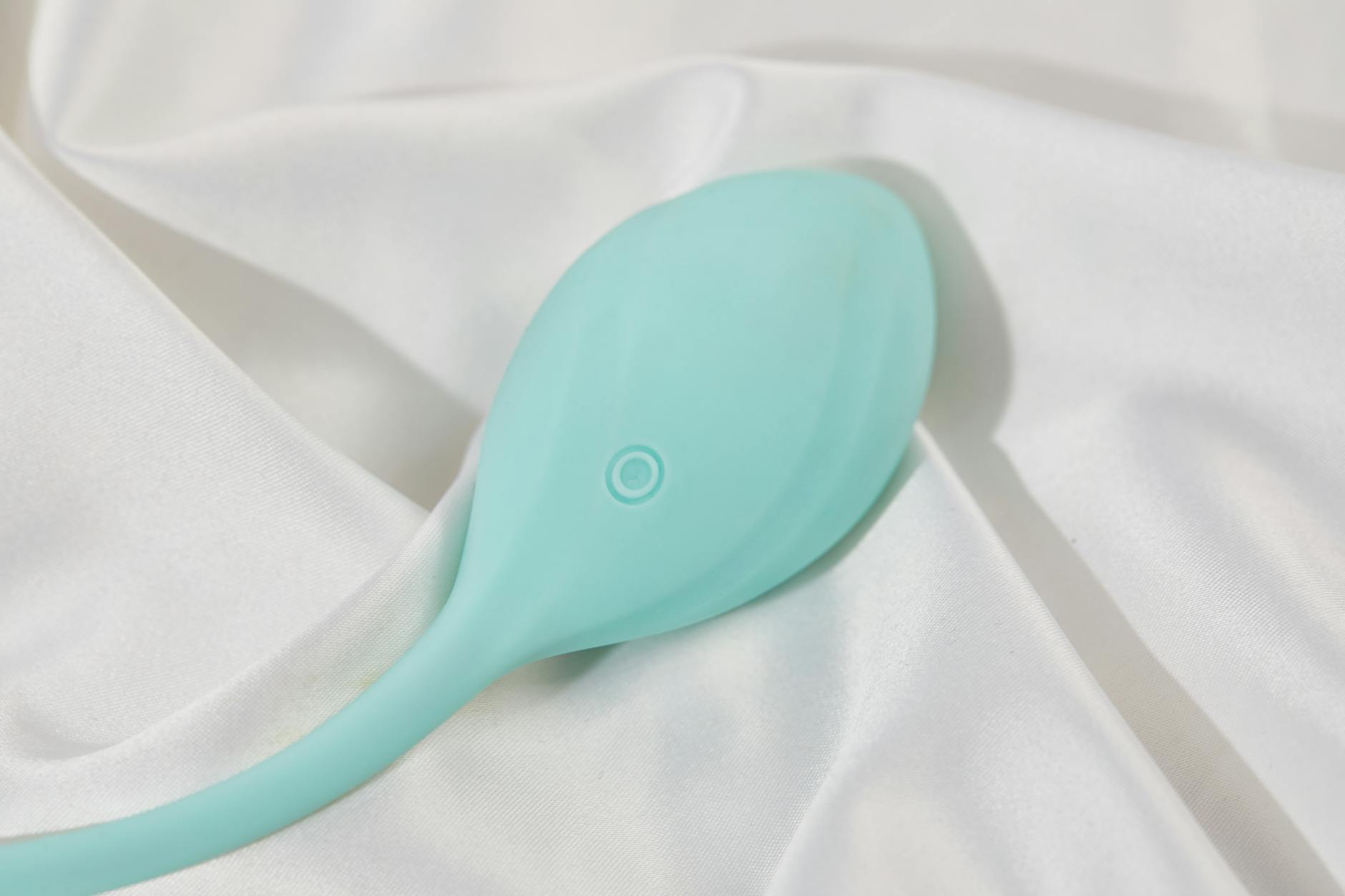
How to Use a Lemon Vibrator for Stronger Orgasms When You're Over 50
Let's be real. The orgasms you're having at 50 are not the same as the ones you had at 25. And that's not a loss. It's a physics upgrade.
Tissue changes, hormonal shifts, and decades of knowing your body create a completely different equation for pleasure. A lemon clitoral vibrator, especially one that uses air pulse technology instead of straight vibration, works with those changes rather than against them. The result? Orgasms that are often deeper, more localized, and significantly more intense than what traditional vibration alone can deliver.
I'm going to walk you through exactly how to use a lemon vibrator after 50 to hit that sweet spot where sensation peaks without friction fatigue.
Why air pulse works differently for you now
The clitoris doesn't shrink or lose nerve endings after menopause. What changes is the tissue surrounding it. The vulvar skin gets thinner, less elastic, and more sensitive to direct friction. For decades, vibrators were designed with younger bodies in mind. They were fast, intense, and required the kind of sustained friction that feels punishing when tissue is more delicate.
Air pulse technology, like what you find in the Lem vibrator, works by creating a suction-and-release pattern that stimulates the thousands of nerve endings in the clitoral head without the grinding friction of traditional vibration. It's gentler on tissue but paradoxically more powerful in terms of nerve activation. Studies show that air pulse stimulation triggers a different neural pathway than vibration. Over 50, where tissue sensitivity is heightened, that difference is profound.
You'll likely notice that lower settings on an air pulse clitoral vibrator produce sensations comparable to much higher vibration speeds. That means you spend less time chasing intensity and more time enjoying the sensation itself.
Start with the lowest setting, not the middle one
This is the adjustment that changes everything for most people over 50. If you're coming from a traditional vibrator habit, your instinct will be to start at setting 3 or 4. Don't.
Begin at setting 1. Spend a full minute there. You're not looking for immediate arousal. You're calibrating. At setting 1, you're training your nervous system to recognize what air pulse feels like. The sensation is concentrated, rhythmic, and almost meditative. Many people over 50 find that starting here creates a build that's more sustained and ultimately more satisfying than racing to intensity.
After 60 seconds at setting 1, move to setting 2 if you want to. Stay there for another minute or two. The progression should take 5 to 8 minutes. This is not slow because it's boring. It's slow because your body's capacity for sensation has changed. You're working with your neurology now, not against it.
Positioning and angle matter more now
When you were younger, you probably found one angle that worked and stayed there. After 50, the anatomy shifts enough that angle becomes critical. The clitoris sits at a slightly different angle to the vulva, and the tissue is more responsive to specific directional pressure.
Start by experimenting with the Lem vibrator at different angles without turning it on. Angle it slightly upward first. Then try it directly against the clitoral head. Then angle it downward slightly. You'll notice that one angle creates a sensation that feels concentrated and direct. Another angle might feel diffuse. Once you find your angle, use that as your baseline. This small adjustment often doubles the intensity of sensation you feel.
Many people also find that holding the vibrator completely still and letting the clitoris move against it, rather than moving the vibrator itself, produces stronger orgasms over 50. The clitoral tissue is more reactive now, and letting it lead sometimes gets you where you need to go faster.
Build in a pause before climax
Here's something that surprises people. If you're used to vibration-based orgasms, you've probably trained your body to want continuous, escalating stimulation all the way through. Air pulse works better with a different rhythm.
When you feel yourself approaching climax, pull the vibrator away completely for 5 to 10 seconds. Not because you're stopping. Because this pause actually intensifies the sensation when you return. The clitoris is congested with blood and nerve activity. That pause creates a reset. When you return to the vibrator, the sensation hits harder, and the orgasm tends to be deeper and longer.
This pause-return pattern is particularly effective with air pulse technology because the sensation ramps up faster than traditional vibration. You'll likely need fewer pause cycles to reach climax, and when you do, the result is often a plateau orgasm rather than a single peak. It feels very different from what you may have experienced before.
The warm-up time is not a limitation
Your body needs 12 to 20 minutes of arousal now before you're going to feel an intense orgasm coming. That's not a problem. That's information. Work with it.
Don't start with the vibrator. Start with whatever foreplay or mental focus gets your blood moving. Read something. Watch something. Touch yourself without the toy. Spend 10 minutes warming up your nervous system. Then introduce the lemon vibrator when you're already aroused, not as the thing that creates arousal.
When you use the vibrator on an already-warm body, you're not starting from zero. You're accelerating from 60. The orgasm builds faster, feels more grounded, and usually lasts longer. The vibrator becomes the final piece of the equation, not the first one.
Lubrication changes the experience
This is not about wetness. It's about comfort and conductivity. Even if you're naturally lubricated, adding a water-based lubricant on top makes a profound difference with air pulse technology. The suction effect works better when there's a slight moisture layer. You get a seal between the vibrator and tissue, which intensifies the sensation.
Apply the lubricant to the outer clitoris, not deep inside. A teaspoon is enough. This is the detail that often tips someone from "this feels nice" to "oh wow, I feel everything." Over 50, when tissue sensitivity is heightened, that extra conductivity matters.
Pattern switching versus speed climbing
The Lem vibrator has multiple patterns in addition to speed settings. Many people default to pattern 1 and just turn up the speed. That's like ordering the same meal at a restaurant every week.
Try moving through the patterns instead. At each speed level, cycle through patterns 1, 2, and 3. Notice which pattern creates sensation in which area. Pattern 1 might hit the clitoral head directly. Pattern 2 might feel more diffuse. Pattern 3 might create a pulsing rhythm. Over 50, you often find that switching patterns as you approach climax feels more intense than staying in one and ramping the speed. Your nervous system gets a fresh stimulus exactly when it needs one.
When clitoral numbness creeps in
If you find that after 10 or 15 minutes with the vibrator, sensation starts to fade, that's not a failure. That's temporary desensitization. It happens to almost everyone over 50 at some point.
The solution is to stop immediately and wait. Two minutes. Just two minutes of no vibration. Your clitoral nerves will reset. When you return to the vibrator, sensation comes roaring back. This is why the pause-before-climax tip I mentioned earlier is so powerful. You're training your body to use silence as part of the pattern, not as a failure state.
Pain during use means stop, not push through
Sharp pain or a sensation of rawness is different from intensity. If you feel it, turn off the vibrator and take a break. Pain at this stage of life usually means friction damage, not resistance that needs breaking through.
The next day, try again with more lubricant. Or try a lower setting. Or try a different angle. Pain is information. It's telling you that this particular combination isn't working for your tissue right now. Listen to it.
Frequency and recovery matter more now
Using a lemon clitoral vibrator once a week is vastly different from using it three times a day. Over 50, tissue recovery takes longer. If you use the vibrator daily and feel sensitivity fading, space it out. Three times a week gives your clitoris time to reset. You'll notice that sensation is sharper on day 3 than on day 2.
Many people find that this actually leads to more intense orgasms because each session starts fresher. Quality over frequency.
FAQ
Can I use a lemon vibrator if I'm on hormone replacement therapy?
Absolutely. HRT changes the game for tissue sensitivity. If you're on estrogen therapy, your tissue will be thicker and more elastic than if you're not. You might find that you can tolerate slightly higher settings or longer sessions without fatigue. Listen to your body. HRT effects vary widely, so what works for your friend might not be your baseline.
How long should one session last?
There's no rule. Anywhere from 5 to 30 minutes is normal. If you're building slowly from setting 1, you're probably looking at 12 to 20 minutes to orgasm. Some days you'll climax in 8 minutes. Other days you won't climax at all, and that's fine. The vibrator is part of your pleasure repertoire, not a machine that has to deliver results every time.
What if I'm using a lemon vibrator with a partner?
Talk about pacing first. Tell them you're starting at setting 1 and moving slowly. Explain that you might need pauses. If they're involved, they can hold the vibrator while you guide the angle, or you can hold it yourself. The conversation matters more than the mechanics.
Is it normal to feel less sensation than I did a few months ago?
Completely normal. Hormonal fluctuations, stress, medication changes, and just the variability of your nervous system all affect sensation day to day. If it lasts more than a few weeks, that's worth checking in with your doctor about. But a week or two of "it's not hitting the same" is just your body's rhythm.
Can I use a lemon vibrator every day?
You can, but you don't have to. Daily use is fine if you're using low settings and taking breaks. If you're trying to use high settings daily and feeling tissue fatigue, scale back. Your clitoris isn't a machine. It's tissue that needs recovery.
What if air pulse doesn't work for me?
Then it doesn't. Not every technology works for every body. Some people over 50 prefer traditional vibration with a different toy. The point isn't to find the "right" vibrator. It's to find what works for your body now. If you try a lemon vibrator for three sessions and it's not landing, that's data. Try something else.
The orgasms are still waiting for you
Over 50, pleasure is not declining. It's shifting. Your body is more sensitive in some ways, less responsive in others. Air pulse clitoral vibrators like the Lem are engineered for the nervous system you have now, not the one you had 20 years ago.
Start low. Go slow. Listen to your body. Use pauses. Take breaks. The orgasms that are waiting for you on the other side of this learning curve are often the most satisfying of your life.
If you want more guidance on how your body is changing and what that means for your pleasure, reach out. We can talk through what's shifted and what might work best for you right now.