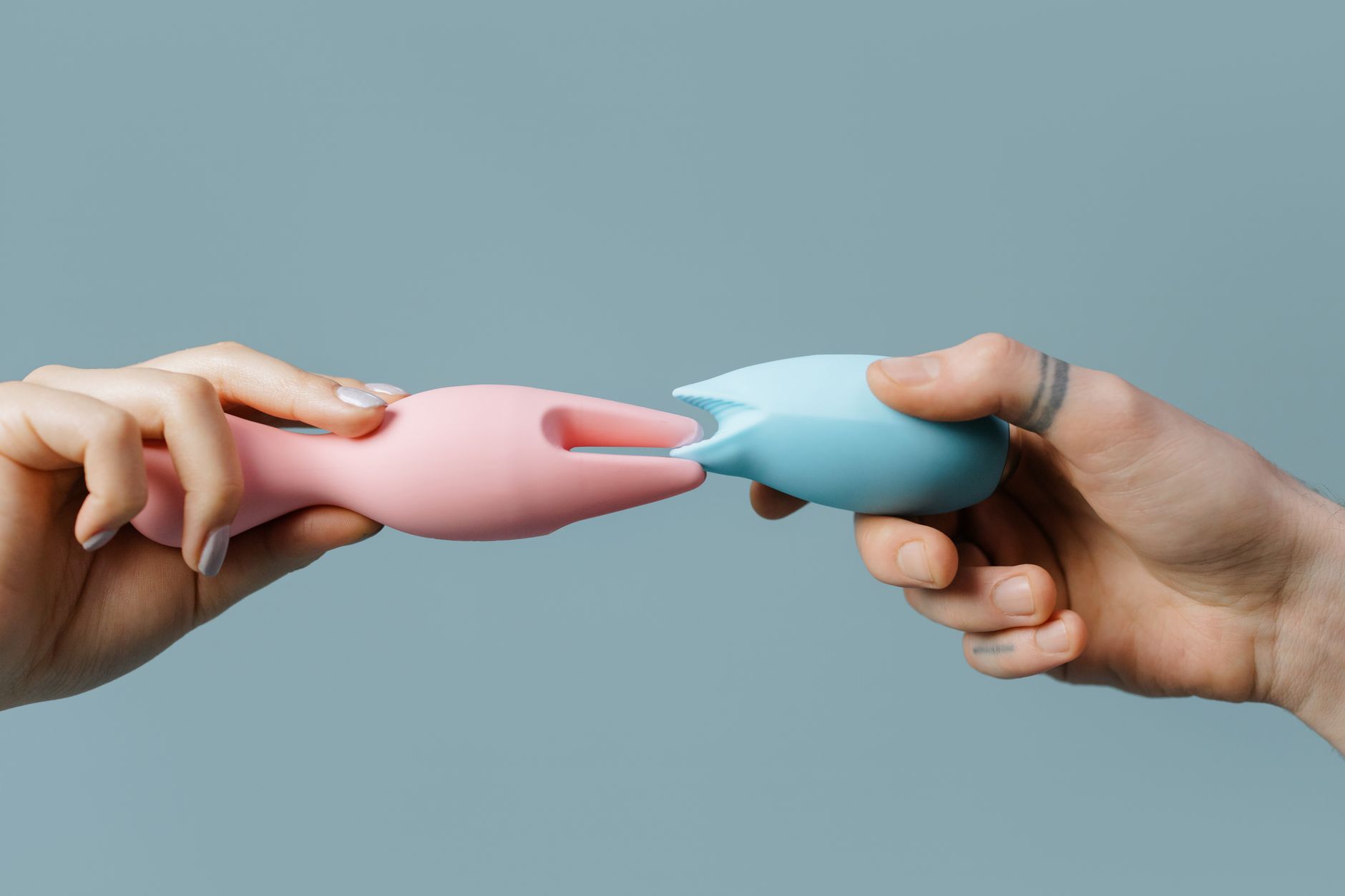
Here's what nobody tells you about new relationships and sensation
Your body doesn't work the same way with someone new. That's not a sign something's broken. It's physics. Your nervous system is recalibrating. Your brain is running a hundred other processes. The vulnerability of being touched by someone you don't yet fully trust creates a background noise that drowns out actual sensation.
Add in different hands, different rhythm, different pressure, and suddenly nothing feels predictable. One night it clicks. The next night it doesn't. You wonder if it's them, if it's you, or if you've somehow become numb to pleasure itself.
I work with couples through this transition constantly. The pattern is always the same: frustration, self-doubt, then blame. The fix is almost always simpler than people expect.
Why sensation actually changes with a new partner
Three things are happening at once.
Your body is still learning their body. Touch is a language. You've fluent in your ex's dialect. With someone new, you're translating. Their fingers land differently. Their tempo is off from what your body learned to expect. Even if the physical stimulation is identical, your nervous system reads it as novel, which takes processing power.
Your mind is divided. New relationships require active attention. Are they enjoying this? Am I taking too long? Do they think I'm weird? This constant background evaluation uses the same mental bandwidth as pleasure does. You can't focus deeply on sensation while you're also performing intimacy.
Your nervous system is in a lower trust state. Trust isn't just an emotional thing. Your parasympathetic nervous system (the one that lets you relax into pleasure) only activates fully when you feel genuinely safe. New relationship = still building that safety. Your nervous system keeps part of your awareness as a lookout, which means less bandwidth for sensation.
This is all temporary. But it's also real, and pretending it isn't just makes it worse.
What a lemon vibrator actually does for this specific problem
A lemon clitoral vibrator becomes a tool for consistency. Here's why that matters: when your partner's hands feel unpredictable, a device with a steady pattern grounds you back into reliable sensation.
The Lem (Lemon Vibrator) uses air-suction technology, which means the stimulation is rhythmic and predictable in a way fingers never quite are. For someone whose nervous system is already in a state of recalibration, that predictability is deeply reassuring. It's not better than partner touch. It's just different, in a way that lets your body settle.
Many couples find that introducing a lemon sexual toy into early intimacy actually builds trust faster. Why? Because you're not relying on them to figure out what works. You're giving yourself the baseline of "this pattern, this pressure, this rhythm works for me." Then your partner can work with that as a reference point instead of searching blind.
The practical way to use a lemon vibrator with a new partner
Start solo first. Non-negotiable. Before you bring it into partnered sex, spend two or three solo sessions figuring out what patterns actually work for your body right now. This matters because new relationships stress-response can genuinely numb sensation temporarily. You need to know where your actual baseline is.
Start at pattern 1 or 2 on the Lem. Build slowly. Notice what rhythm creates arousal versus what just feels like movement. Spend at least 10 minutes on this. You're not racing to orgasm. You're getting reacquainted with your own sensation.
Once you know what works for you alone, bring it into partnered sex in a low-stakes way. The easiest entry point is during foreplay, not as the main event. Let your partner hold the vibrator while they kiss you. This does two things: it keeps the unpredictability of their touch (which your nervous system needs to learn) while adding the steadiness of the device (which grounds you).
Talk about it beforehand. Not in a clinical way. Just something like, "I want to try using this together because sensation feels scattered right now and I want to see what helps." Most partners are relieved. They're often anxious they're not doing it right. A tool that removes that guesswork usually feels like a gift.
When sensation is inconsistent because of anxiety
Sometimes the problem isn't actually physical. You're present one moment and then a thought hijacks your attention. "They're bored." "I'm taking forever." "Do I look weird from this angle?" Your arousal crashes. Then five minutes later your body is back online.
This is incredibly common in new relationships. The nervousness is actually a sign that you care, which is good. But it does create a sensation blackout.
A lemon clitoral vibrator helps here too, but differently. The sensation of suction and rhythm is distracting in the best way. It gives your anxious brain something concrete to focus on besides your anxious thoughts. Many people find that using the Lem actually makes it easier to quiet the mental noise and drop back into body sensation.
If this is your pattern, try using it during partnered sex in a way that lets you control the pace. Your partner can be inside you or touching you, but you hold the vibrator. This keeps you in the active role, which often helps with the anxiety. You're not just receiving and worrying. You're directing.
The conversation that actually works
Here's the thing: if you're using a lemon vibrator because sensation feels inconsistent, your partner probably already senses that something's off. Avoid the trap of presenting it as a solution to a problem he created. Frame it as something for both of you.
Better: "I've noticed that my body responds differently in new relationships. It's not personal, it's just my nervous system being cautious. I want to use this to figure out what my body actually needs right now so we can build toward what's really hot for both of us."
This tells your partner three things. One, you're not blaming him. Two, you understand yourself well enough to know this is temporary. Three, you're invested in building real intimacy, not just pushing through frustration.
Most partners respond well to this because it's honest and collaborative. You're inviting him into the process of learning your body instead of making him solve a puzzle alone.
When to pause and recalibrate
If sensation is inconsistent for more than a few weeks, or if it's combined with low desire or pain, pause the partnered experimentation. Spend a full week using the Lem solo. Get reacquainted with your own baseline.
Sometimes inconsistent sensation is a signal that you're moving too fast relationally. Your nervous system is actually telling you something useful: "I'm not ready yet." Respect that. Slowing down physically often makes sensation feel more consistent because you're not fighting your own nervous system.
If inconsistency persists even in solo play, that's worth mentioning to a doctor. It can signal hormonal shifts, medication effects, or occasionally anxiety that might benefit from talking to a therapist. New relationships are vulnerable. Sometimes our bodies react to that vulnerability in ways that need professional support.
A note on timing
Don't introduce the lemon vibrator in the first two weeks of a relationship unless you're both already very comfortable with toys. You're still in a phase of building sexual trust. Adding a device too early can read as "I'm not satisfied with you" even if that's not what you mean.
Around week three or four, when you've had enough partnered sex to know if this is worth continuing, that's the right moment. By then, you've built enough baseline trust that introducing a tool feels like expanding rather than rejecting.
The actual payoff
Here's what I see happen when couples navigate this well: sensation becomes consistent faster. Not because the vibrator fixes anything, but because you've given your nervous system permission to relax. You're not performing. You're exploring.
The couples who use a lemon sexual toy early in the relationship (but not too early) actually build stronger sexual communication. They've already had the conversation about what works. They know each other's responses. By the time you're past that initial nervous phase, you've got a real foundation.
And honestly? A lot of people find that using the Lem together is just hotter than they expected. There's something about the reliability of it that lets both partners relax into the moment. Your partner gets to watch you experience consistent pleasure. You get to experience consistent pleasure. That's a feedback loop that actually builds intimacy.
The goal isn't to make the vibrator the main event. The goal is to use it as a reference point until your nervous system catches up with your actual desire.
FAQ: Sensation inconsistency and lemon vibrators with a new partner
Why does touch feel different every single time with a new partner?
Your nervous system is in a heightened state of alertness with someone new. This activates your sympathetic nervous system (fight-or-flight) rather than your parasympathetic system (rest-and-digest). Even if the physical touch is identical, your brain is processing it differently depending on your stress level, how safe you feel in that moment, and how much attention your mind is spending on other concerns.
Can a lemon clitoral vibrator help me relax into sensation faster?
Yes, often. The predictability of a device like the Lem gives your nervous system something stable to anchor to. This can actually help activate your parasympathetic response faster than variable touch alone. Using it together can also remove performance anxiety because you're not relying on your partner to "guess" what works.
Should I use a lemon vibrator solo first or go straight to using it with my partner?
Solo first. You need to know what your body actually responds to before you add another person to the equation. Spend at least 2-3 solo sessions with the Lem to establish your baseline. Then introduce it to partnered sex once you understand your own arousal pattern.
What if my new partner feels threatened by the vibrator?
This usually signals that you need a conversation earlier than you thought. A partner who feels threatened by a tool often has insecurity about his own role. Frame it clearly: "This isn't about you not being enough. It's about me understanding my body better so we can build real chemistry together." If he still resists, that's information about his relationship readiness, not about whether using the vibrator is valid.
Is inconsistent sensation in a new relationship normal or a sign something's wrong?
Completely normal, and it's usually temporary. Your body needs time to build trust and familiarity with a new partner. If inconsistency persists beyond 4-6 weeks, or if it's accompanied by pain or zero desire, that's worth checking in with a doctor or therapist. But for the early relationship phase, it's honestly one of the most common experiences.
Can I use a lemon sexual toy if I'm worried about being too intense or sensitive during sex?
Absolutely. The Lem uses suction rather than vibration, which gives you more control over intensity. You can start at lower patterns and adjust. Many people actually find that using a clitoral vibrator gives them better body awareness, which helps them communicate their sensitivity needs to a partner more clearly.
The real truth
Inconsistent sensation in new relationships isn't a flaw. It's your nervous system doing what it's designed to do: protect you while you're building trust. A lemon vibrator isn't a cheat code around that process. It's a tool that lets you cooperate with your own biology instead of fighting it.
You deserve pleasure that feels steady and reliable. You also deserve the time it takes to build that with a new partner. Using the Lem is just a way to honor both of those things at once.
If you're navigating this and feeling stuck, or if the inconsistency is creating tension in the relationship, consider reaching out. Sometimes having a third voice help you both understand what's happening can shift everything. You can always contact us to talk through what's going on.