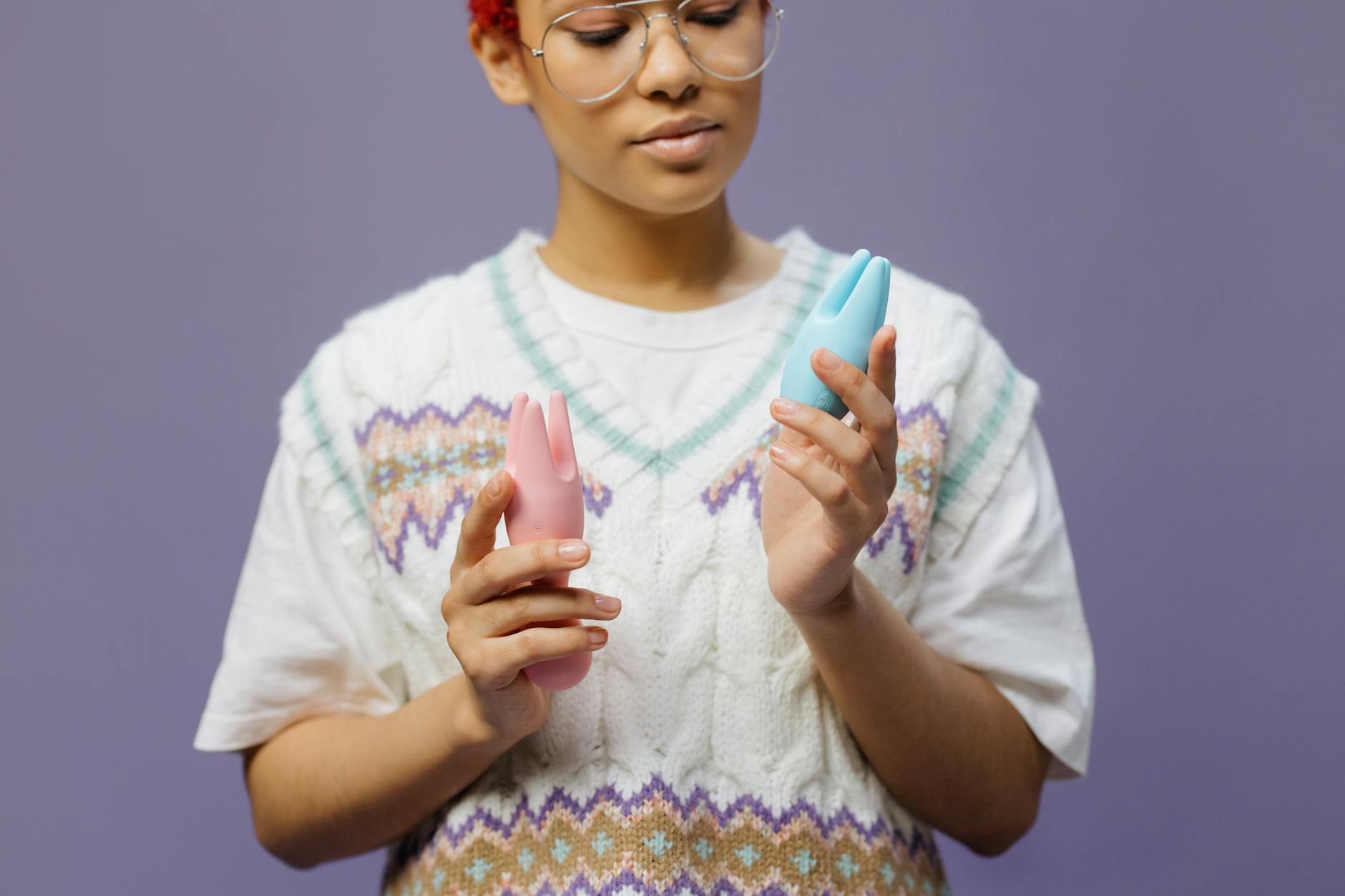
Here's something nobody talks about: new relationships can make your body feel like someone else's. You like this person. Maybe you're excited about them. But when you're together, your clitoris feels like it's on a completely different frequency, far away, hard to reach. It's not broken. It's not you being frigid. It's your nervous system doing what nervous systems do when they're meeting someone new.
Your body is wired to read a room before it gets aroused. When you're with someone new, your nervous system is running a background check: Do I trust this person? Is this safe? What if I look weird doing this? The more mental load you're carrying, the more your physical responsiveness gets dimmed.
It's called spectatoring, and it's wildly common. You're watching yourself rather than feeling yourself. Your brain is narrating the experience instead of letting it happen. Clitoral sensation requires a certain amount of parasympathetic activation (that's the relaxed, trusting part of your nervous system), and new-partner anxiety literally shuts that down.
Add in the fact that a new partner doesn't yet know your body's language, and you've got the perfect storm. They're guessing. You're nervous they're guessing wrong. Your clitoris is basically checking its email instead of paying attention.
This is where lemon vibrators change the dynamic. A clitoral vibrator like the Lem uses air-suction technology that creates consistent, predictable stimulation. Unlike hands (which vary in pressure, rhythm, and intention moment to moment), a vibrator gives your nervous system something reliable to focus on.
Reliability is trust in physical form. When your body knows exactly what's coming, your nervous system downshifts out of high alert. You stop spectating. You start feeling.
A lemon clitoral vibrator also removes the performance pressure from your partner. They're not frantically trying to figure out the right touch. The device handles the mechanical work, and they can focus on intimacy, proximity, connection. That shift in their energy matters. You'll feel it.
The hardest part isn't using the vibrator. It's introducing the idea without triggering your own shame or his defensiveness.
Here's what works: separate the device from the relationship. "I noticed I'm in my head a lot with someone new, and I want to be more present with you. I'm going to try using something that helps me get out of my own way. It has nothing to do with you or what we're doing."
That's honest. That's not blaming him or making him feel inadequate. Most partners, when they understand the vibrator is helping their person actually feel pleasure instead of manufacturing it, are relieved.
If he resists, that's information too. Resistance to your pleasure is worth examining before you invest more time. But most people respond well when you frame it as a gift to the experience, not a criticism of him.
Start with solo exploration first. Use your lemon vibrator on your own a few times to figure out what intensity and pattern actually wakes your body up. This isn't selfish. This is data gathering.
When you're together, introduce it early in foreplay, not as a last resort. Let him see that you're excited about it, not nervous or apologetic. Use it on your own body while he touches you elsewhere. Your clitoris gets the consistency it needs. He gets to participate differently.
The Lem works especially well here because the suction pattern is gentle enough not to numb you out further, but strong enough to cut through the mental noise. It's not violent or jarring. It's like your nervous system finally getting permission to relax.
Here's the tricky part: using a vibrator with a new partner sometimes brings up stuff. You might feel self-conscious. You might worry he'll think you "need" it, as if your body is incomplete without it. He might spiral into his own insecurity if he hasn't been prepped.
Talk about it before, not during. "This thing helps me actually feel. When I feel more, I'm more present with you. That's better for both of us." Keep saying that until you believe it, because it's true.
Your pleasure isn't a reflection on his skill. A new partner doesn't know your body. Your vibrator isn't competition. It's a translator.
If you use a lemon vibrator with a new partner and sensation slowly returns as trust builds, you've got your answer. The numbness was nervous system activation, not relationship incompatibility.
But if you're still feeling numb after several months, even with a vibrator, or if your partner is actively hostile to your pleasure, that's a different problem. That's worth addressing with a therapist or honestly reconsidering whether this partnership is right for you. You deserve someone who wants you to feel good.
Most people find that after a few months with a new partner, the nervous system calms down. You stop spectatoring. Your body remembers how to trust. At that point, some people put the vibrator down for a while. Others keep it as part of their toolkit. Both are fine.
The point is: numbness with a new partner isn't permanent. It's not a sign your body is broken or that you're with the wrong person. It's just your nervous system being cautious. A lemon vibrator gives you a way to bypass the caution without forcing yourself into false arousal. That's all it needs to do.
Not in the way you're probably imagining. Your clitoris doesn't get "used to" a vibrator and forget how to respond to touch. What can happen is that you prefer the sensation of a vibrator to inconsistent or unskilled manual stimulation, which is just good taste, not dependency. You're choosing the tool that works for your body. If you decide to explore without it later, your body will remember just fine.
Not if you want lasting intimacy. Shame around pleasure tends to compound over time. Using it openly (after a conversation) actually builds trust faster than pretending you don't need help. Partners who are worth keeping will understand. Partners who think your pleasure is threatening aren't partners, they're projects.
That's completely valid. Let him watch you use it on yourself first. Get comfortable with it. Then decide if you want him involved. His eagerness to help doesn't obligate you to move faster than feels right. There's no timeline here.
It varies. Some people notice a shift within a few weeks as trust builds. Others take months. What usually happens is gradual: the first time you use a vibrator together, sensation is maybe 40% of what you want. The third or fourth time, you're at 70%. By month three or four of the relationship, you might not need it as much because the nervous system has settled. But there's no rush.
Yes, but the relationship dynamic matters. If he's uncomfortable because he's insecure, that's worth talking through. If he's uncomfortable for religious or personal reasons, you get to decide if that's a compatible value system for you. But your pleasure shouldn't be negotiable. If he won't budge and toys matter to you, that's information about whether this partnership works long term.
Sometimes, if the experience feels clinical or if there's tension about using it. That usually means the conversation wasn't clear enough beforehand, or there's a deeper relationship issue surfacing. If this happens, pause, reconnect without the device, and talk about what made it feel weird. Lemon vibrators work best when they're part of pleasure, not a workaround for disconnection.
Numbness with a new partner is one of those experiences that feels isolating until you realize how common it is. Your nervous system is doing its job. Your body is being cautious. That's not a flaw. A lemon vibrator just helps you move through that phase faster, with more ease, and without forcing yourself into false arousal.
The goal isn't to use a vibrator forever. The goal is to feel present, connected, and alive in your own body. If that takes a device for a while, so be it. Your pleasure is worth whatever bridge you need to get there.
Ready to explore how clitoral vibrators can fit into your relationship? Get in touch and let's talk about what matters most to you.