Let's be real about timing mismatches
Here's what almost nobody talks about: foreplay pressure is one of the most common relationship friction points, and it's almost entirely preventable. One partner wants to move ahead. The other needs more time. Someone feels guilty for "taking too long." Someone else feels resentful for being rushed. The whole thing becomes a mood killer.
The weird part? A lemon vibrator often solves this not by being faster, but by giving you permission to go at your own pace without apologizing for it.
Why the rush happens in the first place
Most foreplay timing problems come from one of three places:
First, many people (especially men) were socialized to see foreplay as something to get through before "the real thing." It's not malice. It's just what they absorbed.
Second, anxiety can masquerade as hurrying. A partner who's nervous about maintaining their erection might unconsciously speed things up. Someone worried about time running out might pressure for faster escalation. Again, not intentional sabotage. Just anxiety wearing a different disguise.
Third, people genuinely have different arousal timelines. Your body might need 20 minutes to warm up. Their body might be ready in 5. Neither is wrong. They're just mismatched.
A lemon clitoral vibrator doesn't fix the mismatch. But it does make it irrelevant.
How air-suction vibrators work differently
Most vibrators rely on your partner's rhythm and effort. You're kind of locked into their pace. With a lemon vibrator or similar suction device, you control the pace entirely. You set the intensity. You decide when to escalate. Your partner can be present and engaged without being the pacing mechanism.
This sounds small. It's actually huge.
Let me break down what's different: a lemon vibrator builds arousal quickly because the stimulation pattern (air-pulse suction rather than vibration) activates nerve clusters in a way that doesn't require as much warm-up time. But here's the key part. You're still in charge of speed. Your partner isn't waiting for you to "catch up." You're both doing your own thing with your own intensity.

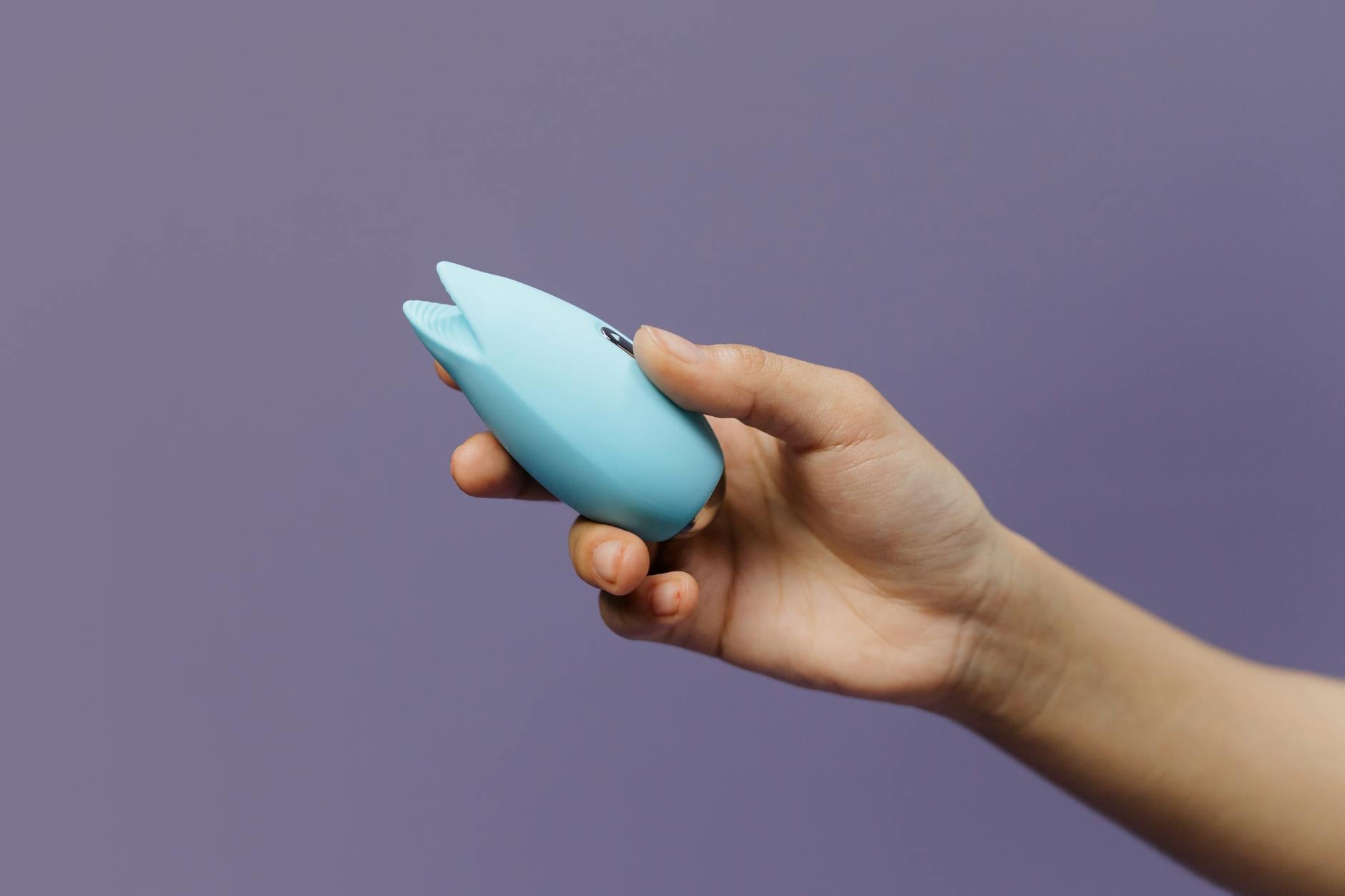
Photo by cottonbro studio on Pexels
The conversation you need to have first
Before you introduce a lemon vibrator into foreplay, you and your partner need to talk about why foreplay timing matters to you. Not during sex. Before. Over coffee. When you're clothed.
Say something like: "I've noticed I need more time to get ready than you do, and I think I'm rushing myself because of that. I don't want to do that anymore. Can we talk about it?"
Then listen. Your partner might admit they're anxious. They might not realize they were speeding things up. They might have their own timing concerns you weren't aware of.
The goal isn't to blame. It's to agree that you both deserve pleasure on your own timeline.
How to actually use a lemon vibrator when foreplay feels pressured
Here's the practical framework:
Step 1: Set an expectation together before you start. Say "I want to use this tonight. It helps me get where I need to be without rushing. Does that work for you?" Knowing it's coming removes the surprise and the potential defensiveness (some partners worry a vibrator means they're not enough, which is its own conversation, but not the one to have mid-foreplay).
Step 2: Start with solo warm-up. Spend 5-10 minutes on your own with the lemon vibrator before your partner gets involved. This isn't selfish. This is you getting to the baseline of arousal you need. You're essentially removing the pressure to "catch up" during partnered foreplay.
Step 3: Invite your partner in. Once you're aroused and relaxed, bring them into the experience. They can touch you, kiss you, use their hands, whatever. The lemon clitoral vibrator becomes part of the experience, not the whole thing.
Step 4: Let them know you're in control. You're holding it. You're adjusting intensity. They're responsive to your cues, not the other way around.
The guilt that usually shows up
Most people (especially women) feel weird using a toy when a partner is present. There's a phantom guilt: "Am I being selfish? Is this saying I don't enjoy them? Does this mean I'm not attracted to them?"
None of that is true. Using a lemon vibrator is saying exactly one thing: your body has a timeline, and you're respecting it. That's actually incredibly hot to most partners once the guilt narrative gets unpacked.
If your partner does get weird about it, that's information. It might mean they need reassurance ("This isn't about you. This is about me honoring what my body needs"). It might mean they have shame around pleasure tools. It might mean something deeper is going on in the relationship that needs its own conversation, ideally with a couples therapist.
But let's be clear: a vibrator is a tool for your pleasure. It's not a referendum on your relationship.
When speed isn't the real problem
Sometimes "rushing through foreplay" is actually code for something else. Maybe your partner doesn't want foreplay at all. Maybe you're the one rushing because you're anxious about being desired. Maybe there's resentment that hasn't been named yet.
A lemon vibrator can't fix those things. But it can buy you enough time and space to notice what's actually happening. Once you're not in crisis-mode about arousal timing, you can see the whole picture more clearly.
If you're using a vibrator to manage a bigger intimacy gap, therapy is worth it. A sex therapist or couples counselor can help you untangle whether this is a normal mismatch or a sign of a larger disconnection.
The surprising thing that often happens
When you stop apologizing for your arousal timeline and start taking charge of it (with a tool like a lemon clitoral vibrator), something shifts. Your partner often relaxes too. The pressure evaporates. Foreplay stops being a race and becomes something you're both actually present for.
You might find that once the guilt and rushing narrative is gone, foreplay naturally takes longer and feels better for both of you. Not because you're spending more time on it. Because you're not fighting your body's pace anymore.
Quick setup: what actually works
If you're trying this for the first time and your partner is involved:
Start with the Lemon clitoral vibrator on the lowest setting. You control it entirely. Your partner can suggest patterns or intensity, but you're the one holding it and deciding. Set a timer in your head for at least 15 minutes of foreplay total. You're not rushing anywhere.
Use water-based lube if you want. It helps. Communicate what feels good. If something doesn't, say so immediately.
The goal is not to get to orgasm as fast as possible. The goal is pleasure without pressure. Those are different things.
People also ask
Will using a lemon vibrator during foreplay make my partner feel inadequate?
Not if you frame it right. A good partner wants you to feel good. Introducing a tool that helps you get there isn't a critique of them. It's actually a gift because it means you can both relax. If your partner does feel threatened, that's worth exploring with them separately. Sometimes that threat is about something other than the vibrator itself.
How long should foreplay take if I'm using a vibrator?
There's no "should." Your body has its own timeline. With a lemon vibrator helping, you might get where you need to be faster than without one. But faster isn't the point. Pleasure without guilt is the point. If that takes 10 minutes or 40, that's what's right for you.
Can I use a lemon vibrator if I've never used a toy with a partner before?
Absolutely. In fact, starting with a conversation about timing and then introducing a vibrator is often easier than introducing one after years of rushed foreplay. You're establishing a pattern of communication and mutual pleasure from the start.
What if my partner wants to use the vibrator on me, but I'm uncomfortable?
Keep control of it. You can let them use it, but you should always be able to take over or stop. Your body, your rules. If you want to hand it to them after you're comfortable, great. If not, also great. There's no obligation.
Does using a clitoral vibrator mean something is wrong with my body or my arousal?
No. It means you have a body with its own timeline and preferences. Everyone's arousal works differently. Using a tool to support that is exactly what tools are for. A hammer doesn't mean your hands are broken. A vibrator doesn't mean your body is broken.
How do I bring this up without sounding like I'm criticizing how foreplay currently happens?
Lead with your body, not their behavior. "I've been noticing my body needs a bit more time to get warmed up than I've been giving it. I want to try something that might help me relax into it more." That frames it as you taking care of yourself, not them doing something wrong. Which is actually the truth.
The thing nobody tells you
Foreplay without pressure is a completely different experience. It's not faster. It's not necessarily longer. It's just easier. Your brain stops running a background anxiety loop about pacing. Your body stops fighting itself. Your partner gets to be present instead of anxious about whether they're doing it right.
A lemon vibrator isn't magic. But it is permission. Permission to take the time your body needs. Permission to stop apologizing for your arousal timeline. Permission to have pleasure on your own terms.
That permission? That's where everything changes.