Let's start with what you've probably already noticed
There are weeks when touch feels electric. Other weeks, the same touch does almost nothing. You thought something was wrong with you. It's not. Your hormones are orchestrating a symphony that changes your sensitivity, arousal speed, and even what type of stimulation feels best.
This isn't a bug in your system. It's a feature. And once you understand it, your lemon vibrators become infinitely more effective because you're working with your cycle instead of pretending it doesn't exist.
How your cycle actually changes arousal
Your hormones don't just control fertility. They also control blood flow to your genitals, the thickness of vaginal tissue, clitoral sensitivity, and how fast your nervous system responds to stimulation. Here's the shape of it.
During your follicular phase (period through ovulation), estrogen climbs. This increases blood flow, makes tissue slightly thicker and more sensitive, and speeds up arousal. Many people report that orgasms feel fuller during this phase. Stimulation builds faster. You might need less warm-up time.
At ovulation, a testosterone spike hits. You might notice sharper arousal, faster heart rate response, and a genuine craving for pleasure. This is the "peak responsiveness" window.
In your luteal phase (after ovulation through menstruation), progesterone rises and estrogen dips. Blood flow to your genitals actually decreases slightly. Tissue becomes a little less engorged. Arousal takes longer to build. Your body might need more time, more pressure, or a different type of stimulation entirely.
Then your period arrives and hormones reset. For some people, the first few days bring heightened sensitivity. For others, pelvic heaviness makes anything feel uncomfortable.
Why lemon vibrators work better when you track the timing
Lemon clitoral vibrators like the air-suction design are brilliant because they work differently at different hormone phases. During high-estrogen weeks, the gentle suction creates rapid arousal. During low-estrogen weeks, you can move to higher intensities or longer warm-up without triggering overstimulation.
The key is this: you're not using the same tool the same way every day. You're adjusting the approach based on your body's actual state. That's not complicated. That's just smart.
When estrogen is high, you might start on pattern 1 or 2 and progress through patterns quickly. The lemon vibrator's responsiveness meets your body's eagerness. When progesterone is high, you might spend more time on lower patterns or start a bit higher if your tissue needs more direct pressure to wake up.
This isn't about forcing pleasure on days when you don't naturally have it. It's about honoring the shape of your arousal window and using the right tool in the right way.
Mapping your cycle to pleasure
Start by tracking three things for two months: the day of your cycle, whether arousal felt easy or slow to build, and what intensity level on your lemon vibrator felt best.
You'll probably notice a pattern. Most people find that days 5-14 (follicular phase and ovulation) are the "easy arousal" window. Days 15-28 (luteal phase) are the "slow burn" window. Your period itself might be variable.
Once you know your pattern, stop expecting the same response every day. If you're on day 7, you probably have the whole arousal toolkit available. If you're on day 22, longer foreplay and higher intensities might be what actually works.
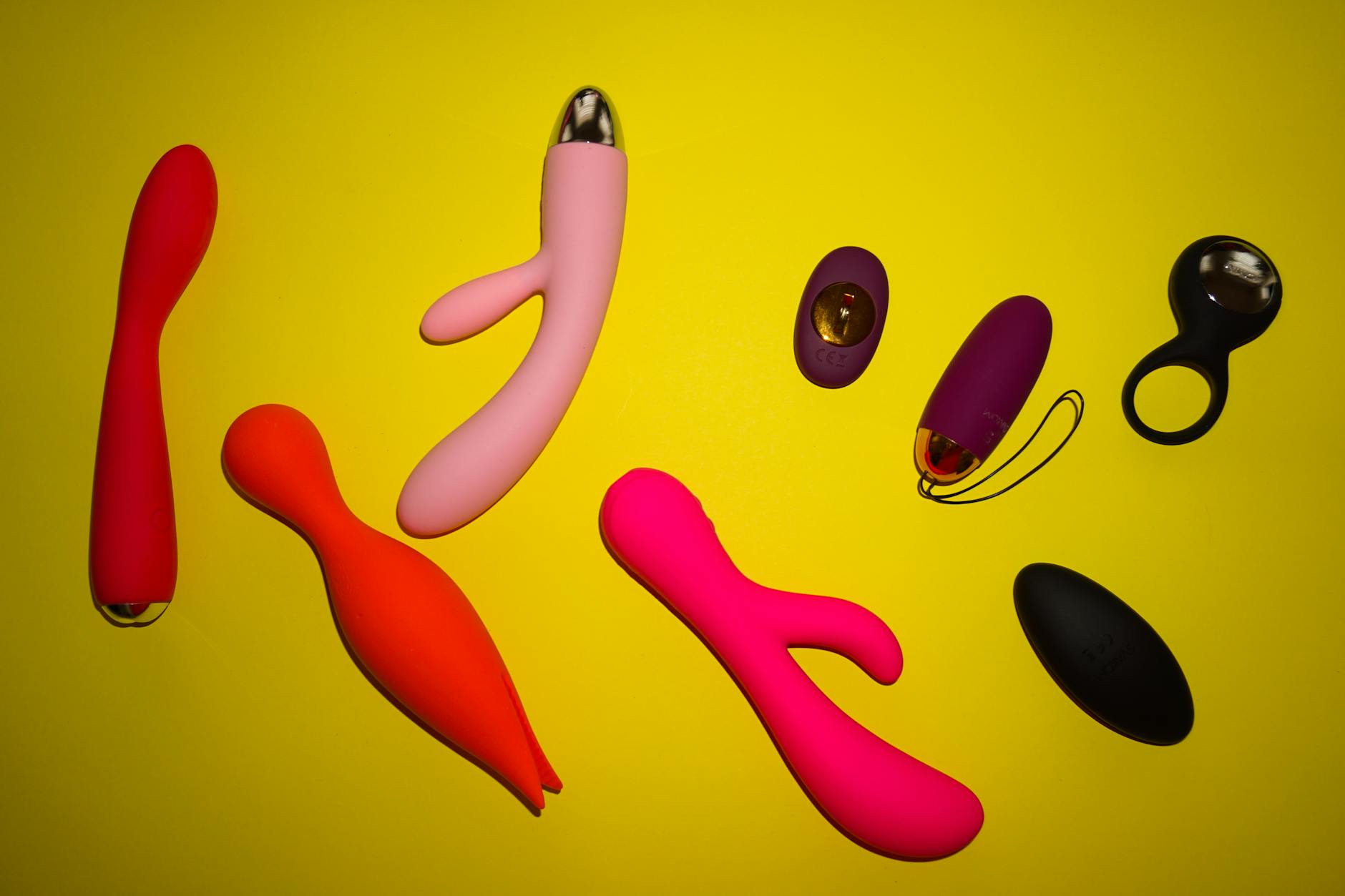
Photo by DRT.fm on Pexels
The partner conversation
If you're using a lemon vibrator with someone else, the cycle tracking becomes even more valuable. Instead of "I'm not in the mood," you have actual data. "My arousal typically takes longer this week" is information. "My body feels more responsive on these days" is invitation.
Many partners feel relieved to learn that slowness isn't rejection. It's just biology. And plenty of partners actually enjoy the longer warm-up window because it gives them more time to connect. The rhythm changes, but the connection deepens.
If you're solo, cycle awareness is purely about respecting your own body and choosing the right tool for the right moment. No performance pressure. No comparing Tuesday to Thursday. Just you, your lemon vibrator, and the actual conditions your nervous system is working with.
When your cycle is irregular or you're on hormonal birth control
Some people have irregular cycles. Some people are on the pill, hormonal IUD, or implant. Hormonal birth control flattens out the hormone peaks and valleys, so you might not experience as much cyclical arousal variation. That's fine. You're likely more consistent, which means your lemon vibrators will feel similarly responsive throughout the month.
If your cycle is irregular, tracking becomes even more useful because you might notice patterns that don't fit a typical 28-day framework. You might have two high-arousal peaks separated by a three-week low phase. Or you might find that tracking actually helps you see your cycle's natural rhythm without relying on a calendar.
The point isn't to fit into anyone else's pattern. It's to honor whatever pattern actually exists in your body.
The practical adjustment toolbox
Here's what I recommend for different cycle phases when using lemon clitoral vibrators.
High-arousal weeks (follicular and ovulation). Start with pattern 1. Warm up for 5-10 minutes if you want to. You can usually skip straight to higher patterns if the sensation appeals to you. Experiment with what intensity actually maximizes your pleasure. This is when many people discover they prefer patterns 3 or 4 on a lemon vibrator.
Mid-cycle peak (ovulation window, usually 2-3 days). Go harder if you want to. This is often when orgasms are strongest and most achievable. Your body is literally primed for this.
Low-arousal weeks (luteal phase). Budget 15-20 minutes for warm-up instead of 5. Start lower. Spend more time on each pattern before advancing. Your tissue needs more time to engorge. That's not a failure. It's just the actual timeline your body is working with.
During menstruation. This varies wildly. Some people are highly sensitive during the first days. Some find touch uncomfortable. Some feel neutral. Try once and note what happens. Don't assume it'll be the same next cycle.
The myth you need to drop
Plenty of people think that if arousal is harder on certain days, they should just push through it. They use higher intensities earlier. They try to force the response. This usually backfires. Overstimulation. Numbness. Loss of interest.
Your cycle isn't a problem to solve. It's information to use. When you stop fighting your body's rhythm and start working with it, pleasure becomes more reliable, more intense, and more sustainable.
Why this matters for relationship resilience
Here's something they don't teach you in sex ed: most long-term relationship strain around pleasure comes from inconsistency that nobody understands. One partner thinks the other lost interest. The other is confused about why the same thing works some days and not others.
Cycle awareness dissolves this. Suddenly there's a reason. Suddenly there's a plan. The disconnect becomes a map. And maps are tools for connection.
If you're partnered, this might be the conversation that actually rebuilds things. Not "we need more sex" but "I want to understand my body better so we can both be more present." That's vulnerability. That's partnership.
FAQ: Your actual questions about cycles and lemon vibrators
Q: Should I track my cycle if I'm on hormonal birth control?
A: Not for arousal patterns. Birth control usually smooths out the hormonal peaks and valleys, so your sensitivity stays pretty consistent. If you're curious about your underlying cycle, you could track anyway, but you're unlikely to see dramatic shifts. Focus on what actually works for your body rather than chasing a pattern that might not exist.
Q: What if my arousal pattern doesn't match a typical 28-day cycle?
A: Plenty of people don't cycle in that framework. Some cycle over 35 days. Some over 24. Some are genuinely irregular. Track what actually happens in your body instead of forcing your experience into someone else's template. Two months of real data beats 28-day mythology every time.
Q: Can I use lemon vibrators during my period?
A: Absolutely. Some people love it. Some don't. Try it once with a lemon clitoral vibrator and see what your body tells you. Menstrual fluid provides its own lubrication, and pleasure can actually ease cramps for some people. Just make sure your toy is clean before and after, like always.
Q: Does progesterone actually affect my clitoral sensitivity?
A: Yes. Progesterone increases slightly before your period, and when it does, you have less estrogen-driven blood flow to genital tissue. This isn't your imagination. It's documented. Your body isn't broken. It's just following its actual hormone profile.
Q: If arousal is slow during my luteal phase, should I use a different toy?
A: Not necessarily. The lemon vibrator still works. You might just use a higher intensity sooner, or warm up longer first. Some people do prefer different toys during different phases because they like more sustained pressure during luteal weeks. Experiment and see what serves you.
Q: How long does it take to notice my arousal pattern?
A: Two full cycles (two months) gives you decent data. Three months is better. After that, you'll probably see the shape of it. Then you can start adjusting how you use your lemon vibrators based on what you've learned.
The bottom line
Your arousal isn't broken when it changes. Your body is communicating. Listen to it. Use your lemon vibrators as tools that adapt to your actual needs instead of trying to produce a consistent response on days when your hormones don't support it.
That's not compromise. That's wisdom. And it usually leads to better pleasure, not less.
Ready to sync your practice with your cycle? Start tracking tomorrow. Two months of real data beats years of guessing. Your body will thank you, and your lemon clitoral vibrator will finally feel like the perfect tool instead of a sometimes-thing.
If you're navigating cycle changes with a partner, How to Use a Lemon Vibrator When You Have a Lower Sex Drive Than Your Partner covers the conversation piece of this puzzle. And if you're curious about the broader picture of how your body changes over time, How to Use a Lemon Vibrator When Your Body Feels Different After 40 walks through the longer arc.
Have questions about using lemon vibrators during specific cycle phases? Get in touch. We're here to help you trust your body and find what actually works.