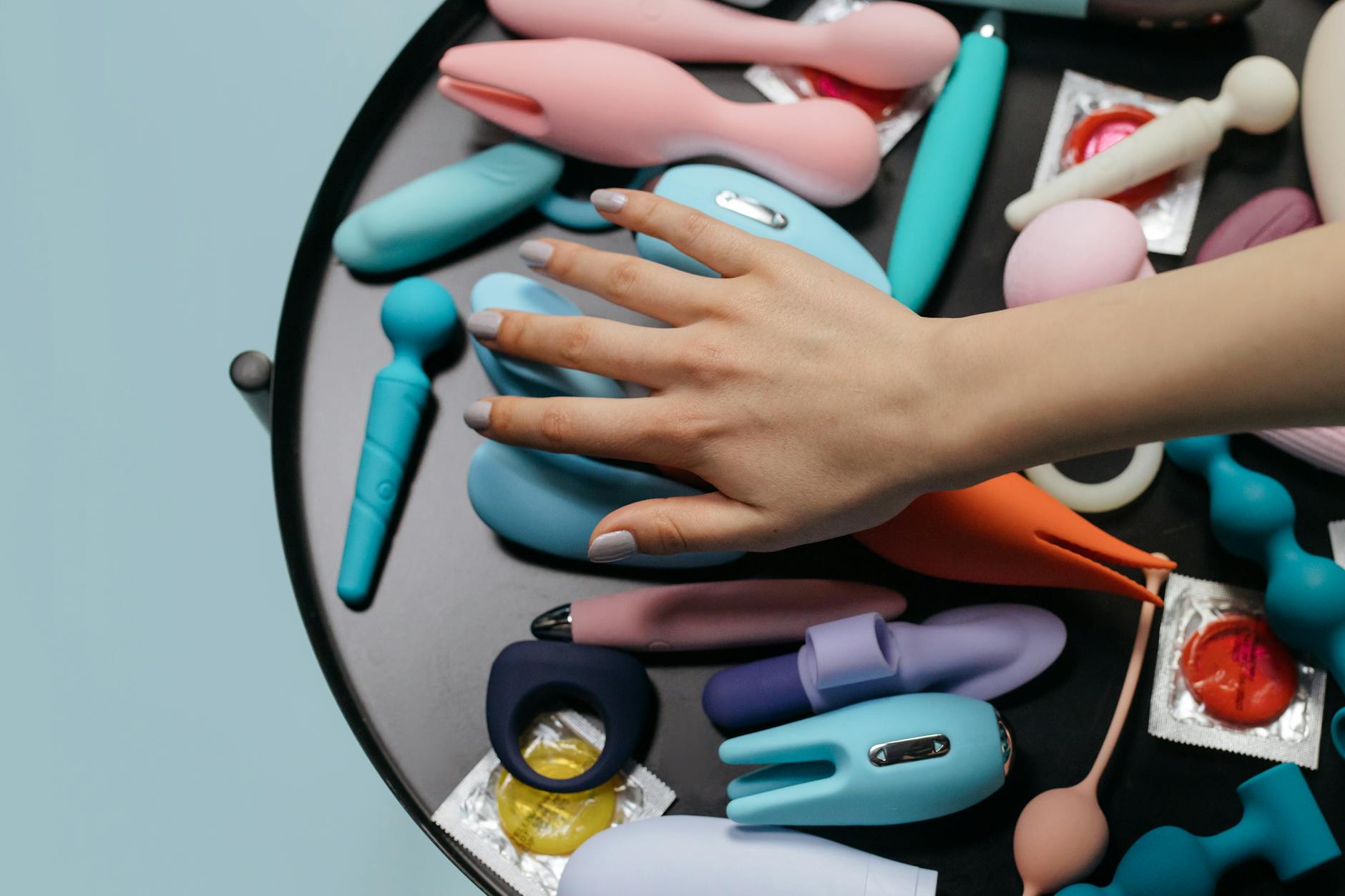
Let's talk about what actually happens when confidence disappears
Somewhere between kids and mortgages and work stress and life, sexual confidence just evaporates. One partner stops initiating. The other stops asking. Neither of you wants to be the one to break the silence first, so you both pretend it's fine. But it isn't fine. It's lonely. And the longer it goes, the heavier it gets.
Here's what I see most: couples where both people want to reconnect but neither knows how to start. The shame isn't about sex itself. It's about not knowing how to be vulnerable again with someone who's seen you fail at this before.
A lemon vibrator or other clitoral vibrator changes the dynamic because it gives you both permission to stop performing and start exploring. It's not about fixing anything. It's about having something honest to do together, without the pressure of being enough for each other. Not yet, anyway.
Why vibrators work better than willpower when confidence is gone
When you've been avoiding sex or struggling with disconnection, trying to push through with intercourse alone is like trying to run a marathon when you haven't walked in months. Your body doesn't respond the way you remember. Your nervous system stays guarded. Then everyone feels worse.
Introducing a vibrator shifts the entire frame. Suddenly you're not having sex. You're trying something new together. There's an external focus, which means less performance pressure on both of you. And here's the thing that nobody talks about: seeing your partner get genuine pleasure from something other than you takes the weight off both your shoulders.
A lemon clitoral vibrator, specifically, works well for couples rebuilding confidence because it's not penetrative. There's no deep vulnerability required right away. You can build arousal slowly, stay in control of intensity, and stop whenever either of you needs to. That agency matters when you're both healing.
The conversation that has to happen first
I'm going to be direct: you cannot introduce a vibrator and expect it to magically fix disconnect. The tool only works if you've already decided, together, that you want to try.
This means talking before you buy anything. Not during sex, not when you're both stressed, but in a safe moment where you can say: "I miss us. I want to rebuild this. I don't know exactly how, but I'm willing to try something new if you are."
Your partner might feel relief. They might feel defensive. They might worry you're not attracted to them anymore. All of those are valid. Your job is to name what you're actually scared of, not what you're actually asking for.
Bad approach: "I think we should try a vibrator."
Better approach: "I think we've both been scared to try again after things got quiet. I don't want that to be our story. Would you be open to exploring together, at whatever pace feels right?"
See the difference? One is a tool request. The other is a commitment request.
How to choose the right vibrator for rebuilding
Not all vibrators are created equal for couples who are nervous. You want something that feels elegant, not clinical. Something that doesn't scream "sex toy" when you look at it. Something with control.
Lemon clitoral vibrators are designed with exactly this in mind. They're simple, intuitive, and beautiful enough that they don't feel like a medical device. Start with the basic model if you're nervous. You don't need extra patterns or remote control when you're learning how to touch each other again.
The suction mechanism on a lemon vibrator is gentler than traditional vibration patterns, which means your partner can control intensity without it feeling overwhelming. That's crucial when arousal is fragile.
Buy it together, or agree on what you're getting before it arrives. Opening a box of anything you didn't both consent to breeds resentment, not pleasure.
The first time: how to actually use it
Set aside time when you're not exhausted or distracted. Not a romantic dinner with candles (yet). Just a time when you can be present without your phone or the kids or the thought of work tomorrow.
Start clothed. Yes, really. Talk about what you're going to try. Let your partner know you want to focus on their pleasure first, with no expectation of intercourse or any specific outcome. This removes the finish line entirely.
When you're both ready, move to a comfortable position. Many couples find side-by-side easier than face-to-face when you're nervous. Less eye contact pressure. Your partner can guide your hand on the vibrator or hold it themselves. Go slow. Start at the lowest setting.
If sensation feels too intense or triggering, stop. Talk about what happened. Don't push through. Reconnection isn't linear.
After, don't immediately have sex. Let your partner rest. Cuddle. Talk about what felt good, what felt uncomfortable, what you might try differently next time. This conversation is half the healing.
Weaving it into actual intimacy
Once you've both felt the tool in a low-pressure context, using it during foreplay becomes natural. Your partner gets aroused faster. Orgasm becomes possible again, which means sex stops being a source of anxiety and becomes something that works.
Many couples find that introducing a lemon vibrator helps rebuild their own capacity for touch. Because when one partner isn't struggling to come, the other partner can actually be present instead of performing. Pressure evaporates. Presence arrives.
You might use it every time, or just sometimes. The point is that you've given yourselves permission to try something without shame. And that permission is contagious. It starts with a vibrator. It ends with actual vulnerability.
When one partner is more nervous than the other
Sometimes one of you wants this and the other is skeptical or uncomfortable. That's normal. The nervous person's concerns are valid. They're not being prudish.
If your partner is hesitant, ask what's actually scary. Is it about the relationship changing? About feeling inadequate? About something they were taught about sex? Name it. Then address it, not the vibrator.
You might say: "I'm not bringing this in because you're not enough. I'm bringing it in because I want both of us to feel good again, and I think this might help us get there together."
Give your nervous partner control. Let them choose when to use it. Let them turn it off anytime. Autonomy reduces fear faster than reassurance does.
What changes after you've reintroduced pleasure
Couples who rebuild sexual confidence report three consistent things: more touching throughout the day, more ability to laugh together, and more willingness to be vulnerable in non-sexual contexts too.
Sex becomes less of a minefield and more of a language you're learning again. You're gentler with each other. You're more honest.
This doesn't mean everything is fixed. When your partner has low desire, there's often a deeper reason. Sometimes therapy helps. Sometimes it's a medical issue. But at least you're talking about it now instead of pretending.
If both of you are actually scared or disconnected in ways that go beyond sex, individual or couples counseling is worth considering. A vibrator is a tool, not a therapist. It can help you reconnect, but it can't fix deep emotional rupture. That takes different work.
The long-term reality
Most couples who successfully rebuild sexual confidence find that the vibrator eventually becomes just one part of their routine, not the centerpiece. Some stop using it regularly. Some use it every time. There's no right answer.
What matters is that you've proven to yourselves that you can try something vulnerable together and survive it. That you can ask for what you want. That your pleasure matters.
Rebuilding takes longer than the initial loss. Be patient with yourself and your partner. Some weeks will feel easier than others. That's normal. You're learning each other again, which is actually an intimate gift, even when it's hard.
People also ask
How do I know if my partner will be open to using a vibrator together?
You ask. Not during sex or conflict, but in a calm moment when you can both think clearly. Start with the emotional truth: "I want to rebuild our connection." Then ask if they're open to exploring together. Their answer tells you what you need to know. If it's no, ask what would need to be true for them to consider it. Often, nervousness isn't rejection. It's just fear that needs naming.
Can using a lemon vibrator make my partner feel inadequate?
Yes, if you introduce it wrong. If you bring one home without talking or make it seem like you need it because they're not enough, of course they'll feel bad. But if you frame it as something you want to explore together because you miss them, the story changes. Let them hold it. Let them use it on you. Make it collaborative, not a solution to a problem.
What if we try it once and it feels awkward or bad?
One bad experience doesn't mean it won't work. Awkwardness is normal when you're trying something new. Talk about what felt off. Was it the tool? The timing? The pressure you were putting on the moment? Then try again differently, or let it go for a while and circle back. There's no deadline on this.
How often should we be using a vibrator once we've started?
There's no rule. Some couples use one every time they're intimate. Others use it occasionally. What matters is that you're both okay with the frequency and that it feels like something you want, not something you have to do. If it starts feeling obligatory, check in about why.
Is it true that vibrators can numb sensation over time?
No. That's a myth. Your clitoris doesn't become less sensitive because you've used a vibrator. What sometimes happens is that you start preferring the intensity of a vibrator to manual touch, which is totally fine. Your preferences can change and that's normal. If sensation feels genuinely numb after using a vibrator, that's usually a separate issue worth mentioning to a doctor.
What if one partner gets interested in solo use and the other feels left out?
That's actually healthy. Couples who can each explore pleasure on their own often have better intimacy together because there's less pressure on any one encounter to be everything. If the dynamic feels imbalanced, talk about it. Maybe you explore together sometimes and solo sometimes. Maybe you show each other what you like when you're alone. Maybe that becomes its own form of intimacy.
The thing nobody tells you
Rebuilding sexual confidence isn't really about the vibrator. It's about choosing each other again, even when it's awkward and you're both scared. The lemon clitoral vibrator is just the permission slip. The real work is the conversation, the vulnerability, the willingness to try. That's what creates lasting reconnection.
Your partner hasn't forgotten how to want you. They've just been protecting themselves the same way you have. Give them the chance to remember.