
Here's the thing about hands
There's something irreplaceable about manual touch. Your partner's hands carry their attention, their tempo, their responsiveness to what they feel happening in your body in real time. A lot of people who prefer manual stimulation aren't rejecting vibrators. They're protecting that direct feedback loop. The hand knows. The hand adjusts. The hand feels you.
So when you introduce a lemon clitoral vibrator into that dynamic, the goal isn't to replace hands with a device. It's to amplify what hands can do, let them do what they do best, and use the vibrator to deepen sensation without breaking the intimacy of touch.
Why manual-preference partners resist toys
Let's start with honesty. If your partner prefers manual stimulation, they've probably said or implied that vibrators feel impersonal, too intense, or like they're being replaced by a machine. These aren't irrational fears. They're usually about three real things.
First, loss of control. When you hand someone a vibrator, they suddenly have a tool they might not know how to use. The rhythm changes, the intensity is fixed or unfamiliar, the sensation becomes machine-driven instead of partner-driven. That's destabilizing for someone who's spent years learning your body through their hands.
Second, it can feel like a judgment. If your partner hears "I want to use a vibrator," what they sometimes hear is "your hands aren't enough." That's almost never what you mean. But it lands that way if the conversation happens wrong.
Third, pleasure inequality. If only one of you is getting the vibrator, it can feel like you're on a different plane of pleasure while they're still doing manual work. That breeds resentment fast.
The conversation that actually works
Don't lead with the device. Lead with what you want to feel.
Instead of "I want to try a lemon vibrator," try: "I've been thinking about how we could extend the buildup. I get sensation from vibration that feels different than friction, and I think it could make the whole experience last longer for both of us."
Then actually explain what you want: "I don't want it to replace what you're doing. I want us to blend it in. Like, you'd still be touching me. The vibrator would just add another sensation on top of that."
This reframes the vibrator from a replacement to an expansion. Your partner stays in control, stays involved, and understands the benefit isn't just for you.
Listen to their actual objection too. "I feel like I'm not enough" needs a different response than "Vibrators are too intense." The first is about reassurance and role. The second is about technique.
How to layer lemon vibrators into manual play
The architecture of good partnered vibrator use with a manual-preference partner is simple: hands first, vibrator second, hands throughout.
Start with your partner's hands alone. Get aroused, get wet, let them warm you up with texture and pressure the way they know how. This is non-negotiable. Five to ten minutes minimum. You want them to feel in control from the start.
Then introduce the vibrator as an intermission tool, not the main event. Say something like "Try holding it here while you're touching me" or "I want to see what this feels like when you're using it." The key word is "with," not "instead of." Your partner holds the vibrator while their other hand is still on you, still exploring, still present.
A lemon clitoral vibrator is actually perfect for this because the suction sensation is gentler than direct vibration. It doesn't overwhelm the sensation of fingers. It complements it. Your partner might hold it against you while they're using two fingers on your labia, or hold it while they're kissing your neck. The vibrator becomes a tool they're wielding, not a replacement for them.
Start with the lowest intensity settings (1-3 on the lemon vibrator). Your partner can adjust if you ask, but honestly, let them control the button. This keeps them in the driver's seat.
Practical positions that work
If you're on your back, your partner can kneel between your legs with the vibrator in one hand and their other hand free to touch your thighs, labia, or body. They can see your face, you can guide them verbally, and they're not trapped by the device.
If you're side by side, they can hold the vibrator against you while lying alongside you, their arm free to hold you, pull you closer, or touch your breasts. This position feels more intimate because you're facing each other.
If you're seated face-to-face, your partner can sit between your legs, hold the vibrator, and have their other hand available for penetration if that's in your dynamic. Again, hands stay active.
The worst position is you lying passive while they stand over you with the vibrator. That's the setup that feels most clinical and most like you're being done to. Avoid it.
What to do if the vibrator is "too much"
If your partner gets the vibrator in there and you immediately say "It's too intense," that's useful data, but it can derail the mood and make them feel like they did something wrong.
Instead, try: "Yes, that's intense. Can you pull it back a little?" or "I like that. Use a lighter touch." Frame it as refinement, not rejection.
If the sensation is genuinely too much and you need a break, be direct: "Let's stick with your hands for a bit," and go back to manual play. There's no failure here. You're gathering information about what works.
When sensation fades back to manual
Here's something that happens with lemon clitoral vibrators and other suction toys: your body gets used to the intensity quickly. After 5-10 minutes of vibration, you might notice the sensation plateaus. That's normal and it's not a sign you need a stronger toy.
When that happens, transition back to hands. Manual stimulation won't feel boring. It will feel different, fresher, more grounded. Your partner can vary their pressure, their speed, their rhythm in ways the device can't. That's the actual superpower of manual touch.
Think of the vibrator as a warm-up tool, not the main course.
The permission conversation your partner needs
Some partners who prefer manual stimulation also struggle with permission. They worry that if you're enjoying the vibrator, you're secretly wishing you could use it solo, or that you're getting bored with sex without it.
You might need to explicitly say: "I'm not going to use this without you. I like it because you're using it. It's different when it's you holding it. I want this to be how we play together."
If you do want solo vibrator time, that's completely separate. Have that conversation as its own thing. Don't mix it with the partnered conversation.
How a lemon vibrator actually enhances manual play
The suction sensation from a lemon vibrator is different than vibration. It's gentler, it works with the clitoral structure instead of against it, and it doesn't numb sensation the way some intense vibrators do. That means your partner's hands stay effective throughout the experience.
You're not trading hands for technology. You're adding a sensation layer that keeps the experience fresh without losing the feedback loop your partner cares about.
For partners who worry about performance, this actually helps. If you're struggling to reach orgasm with hands alone, introducing a lemon clitoral vibrator means your partner isn't working harder. They're working different. That takes pressure off them.
If you're in a dynamic where manual stimulation has felt inconsistent or where your partner sometimes doesn't know what to do, the vibrator gives them a clear tool and a clear role. You're not asking them to be perfect with their hands anymore. You're asking them to hold a device and stay present. That's a different ask, and often an easier one.
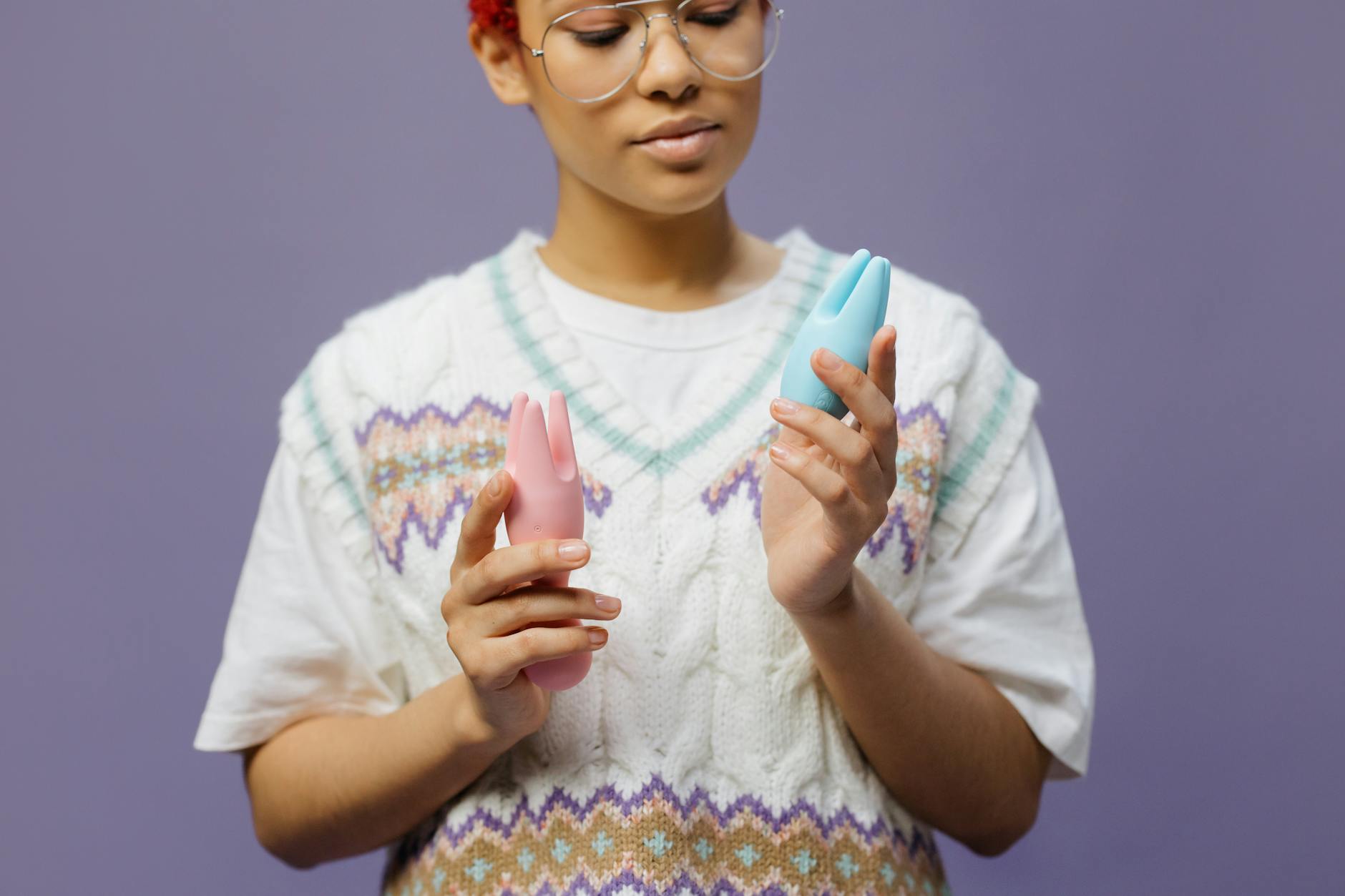
FAQ: Blending toys into manual play
Can I use a lemon vibrator if my partner is controlling everything?
Absolutely. In fact, that's ideal. Let your partner hold the device, adjust the intensity, decide when to use it. They stay in control, and you get the sensation you want. It's not about taking agency from them. It's about giving them a new tool to use the way they want.
What if my partner feels emasculated by the toy?
That's about language and reassurance, not the toy itself. Frame it as something you want to explore together, not something you're using because they're not enough. Use it in their hands, not alone. Make sure they're still pleasuring you with their hands between and after vibrator moments. The vibrator is a supplement, not a replacement.
How often should we use lemon vibrators in partnered play?
There's no rule. Some couples use them every time. Some use them once a month. What matters is that your partner feels it's optional, not expected. If they feel pressure to use a vibrator they're not excited about, it becomes a chore. Enthusiastic consent matters more than frequency.
Is it weird if the vibrator feels better than hands alone?
No. Different sensations hit different nerve pathways. You can love your partner's hands and also enjoy the specific sensation a lemon clitoral vibrator creates. Both can be true. The vulnerability is saying it out loud without making your partner feel inadequate.
What's the best position for a partner-held vibrator?
Side-by-side or face-to-face is usually most intimate. Your partner can still touch other parts of your body, see your face, and feel connected. Avoid positions where you're passive or where they're standing above you. Those feel clinical and can trigger the "replacement" anxiety you're trying to avoid.
Can we use a lemon vibrator if my partner only wants clitoral stimulation?
Yes. A lemon clitoral vibrator is designed specifically for external play. Your partner's hands can work alongside it exactly the same way they would without it. Their manual technique stays the same, the vibrator just adds sensation.
The real point
A lemon vibrator in the hands of someone who loves you and knows your body is never a replacement for manual play. It's a tool they can use to deepen what they're already doing. It keeps them in control, keeps them present, and keeps hands as the primary vehicle of pleasure.
Your partner doesn't have to choose between manual stimulation and vibrators. They can layer them. And when you frame it that way, as an addition rather than a substitution, most manual-preference partners stop resisting and start experimenting.
The conversation matters more than the device. But the device, used right, makes the conversation easier to have.
Sources
Gottman Institute. (2023). "The role of novelty and curiosity in long-term sexual satisfaction." Relationship Research Quarterly.
Meston, C. M., & Frohlich, P. F. (2000). "The neurobiology of sexual function." Archives of General Psychiatry, 57(11), 1012-1030.
Perel, E. (2018). Mating in captivity: Unlocking erotic intelligence. Harper Perennial.