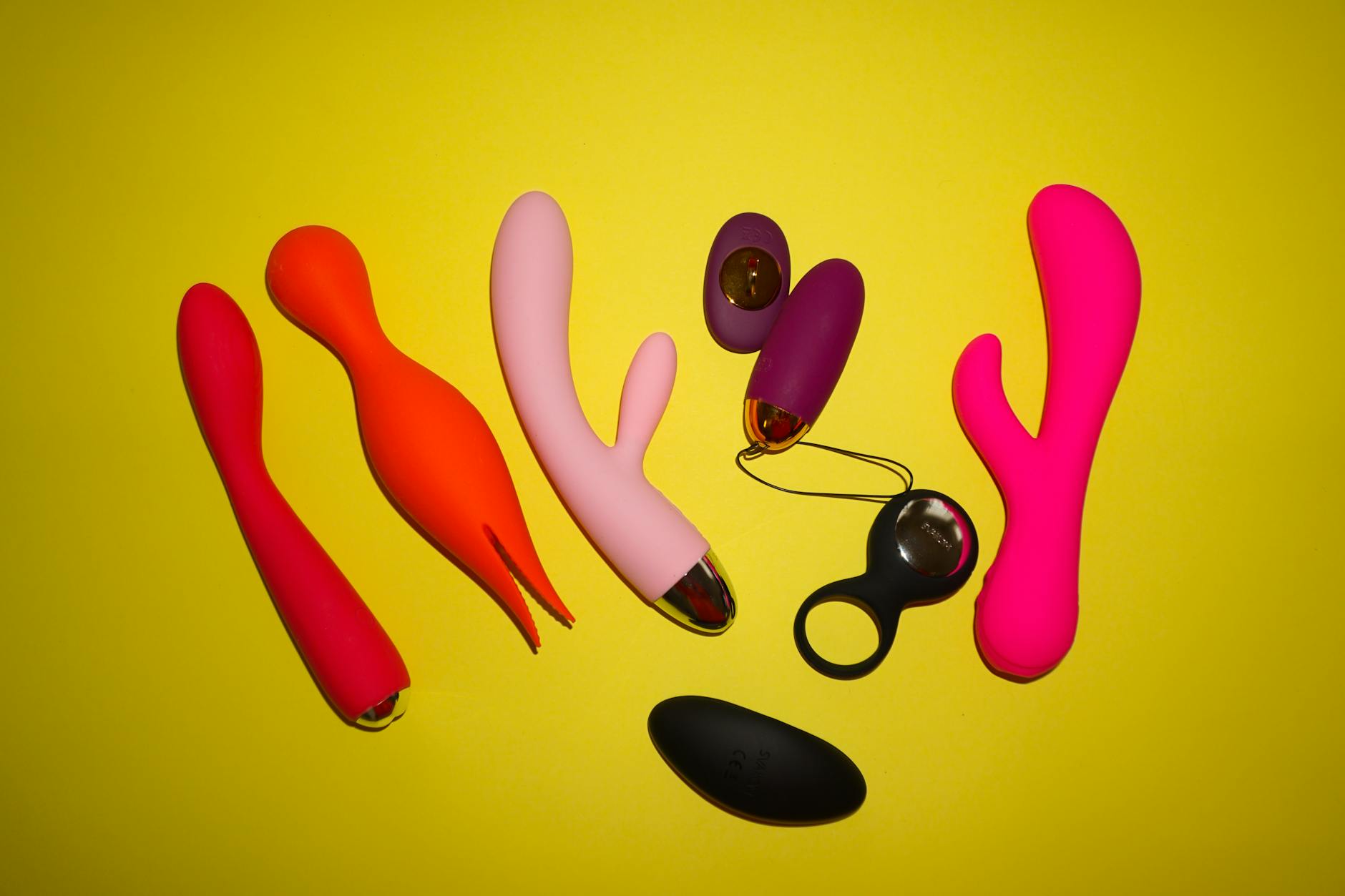
The thing nobody tells you about vibrator anxiety
Nerves kill arousal faster than anything else. Not judgment. Not inexperience. Pure, simple anxiety. Your nervous system tightens, blood flow redirects, and the whole experience flattens before it even starts. That's biology, not a personal failing.
Here's what I see in my practice constantly: people (especially women over 30, and especially in their first partnership with a clitoral vibrator) show up with genuine curiosity and then get sabotaged by their own fear that it won't work, that they're doing it wrong, or that wanting this thing means something about them they're not ready to examine. None of that is true, but feeling it doesn't make it less real.
The good news is that anxiety isn't a blocker. It's just information. And it's fixable.
Why lemon vibrators specifically trigger less anxiety than you'd think
There's something almost deceptively simple about air-pulse stimulation like the Lem. It doesn't vibrate in the traditional sense. It creates a gentle suction and release pattern that mimics oral stimulation more closely than a traditional vibrator. That sounds clinical. What it actually means is that your body recognizes it faster.
Traditional vibrators can feel alien at first. They buzz. They have a frequency your clitoris isn't used to. Lemon vibrators (air-suction clitoral stimulators) feel more immediately intuitive because they work with sensation your body already knows from actual contact.
Does this mean lemon vibrators work for everyone? No. Does it mean they're less intimidating as a first toy? Yes. And less intimidation means less sympathetic nervous system activation, which means less of that tightness that kills arousal in the first place.
The three types of first-time vibrator anxiety (and what to do about each)
Type 1: "What if it doesn't work for me?"
This is performance anxiety disguised as rational concern. Your brain is trying to protect you from disappointment by convincing you it's already a done deal.
Here's what helps: separate the expectation from the experience. You're not using a lemon clitoral vibrator to achieve an orgasm. You're using it to learn how your body responds to a particular type of stimulation. Full stop. If you come, great. If you don't, you still got data.
Start with zero pressure around outcome. Pick a time when you're not ovulating (your clitoris is less sensitive mid-cycle, especially if you menstruate). Have water nearby. Be warm. And go in knowing that the first time is just information gathering.
Type 2: "Am I doing this right?"
There is no right. That's the honest answer. Your clitoris is yours alone. Sensation distribution varies wildly. Some people need the vibrator directly on the clitoris. Others need it slightly to one side, or over the hood. Some want the lowest setting. Others jump straight to high.
The only "wrong" is putting pressure on yourself to match what you think is supposed to happen.
Instead: spend the first few times just exploring. Move the vibrator around. Notice what makes you pause, what makes you lean into it, where the sensation feels strongest. You're building a map of your own body. That takes time. Three sessions minimum before you judge whether something works.
Type 3: "What does this say about me?"
This is the deepest one and often the one people don't name out loud. Using a toy feels like an admission of something. Wanting external stimulation to have an orgasm can feel like you're failing at the partnered version. Or it can feel like you're making a statement about needing more than what your partner can give, which is terrifying if you haven't talked about it.
Here's the truth: wanting to explore how your body works is not a criticism of your partner. It's not a confession of inadequacy. It's you being curious about yourself, which is the opposite of selfish. It's actually the most grounded, self-aware thing you can do.
If you have a partner, the conversation isn't "I need a vibrator because you're not enough." It's "I'm curious about how my body responds to different types of stimulation and I'd like to explore that." Those are completely different statements.
The practical setup that calms your nervous system
Anxiety lives in the details. Fix those and anxiety shrinks.
Eliminate distractions first. Phone in another room. Door locked. Enough time that you won't be checking the clock. Your nervous system needs to know it's genuinely safe before your body can relax into pleasure.
Get warm. Literally. Take a warm shower first or do something that raises your core temperature. Warm bodies are more responsive bodies.
Use lube. Even if you don't think you need it. Water-based is perfect for silicone lemon vibrators. Lubrication isn't failure. It's preparation. Your clitoris will be more sensitive and responsive with lube, which means you'll feel results faster, which means your brain will relax its grip on the fear that "nothing is happening."
Start at the lowest setting. Not because you're fragile. Because your nervous system needs to ease in. If the first sensation is intense, your body goes into protective mode. If it's gentle, you can gradually relax into stronger sensation. This is true for everyone, regardless of experience level.
What actually happens in your nervous system when anxiety meets the lemon vibrator
When you're anxious, your sympathetic nervous system is activated. That's your fight-flight system. Blood is in your muscles, ready to run. Your pupils dilate. Your breathing gets shallower.
Arousal requires the opposite: parasympathetic activation (rest-and-digest mode). Deeper breathing. Relaxed muscles. Blood diverted toward your genitals, not toward your limbs.
You can't be in both states at once. So the anxiety has to ease first.
This is why the setup matters. This is why starting slow matters. This is why expectations matter. You're not forcing yourself to relax. You're creating conditions where relaxation happens naturally.
Once your nervous system settles (usually after about 5-10 minutes of gentle stimulation), your body will start to respond more obviously. You'll notice your breathing deepen. You'll notice your hips moving without you deciding to move them. You'll notice sensation intensifying not because the vibrator got stronger, but because you're receiving it more fully.
That's when things usually shift.
When to know if it's actually not your thing (versus anxiety masquerading as incompatibility)
Three real sessions. Warm, unhurried, properly set up, with lube, starting on the lowest setting.
If after three sessions you still feel nothing, or if you actively dislike the sensation, that's real data. Maybe a lemon clitoral vibrator isn't your toy. Maybe you need something different. Maybe you need more time. All of that is okay.
But if you're on session one and already telling yourself it's not working? That's anxiety talking, not reality. Stick with it through at least session three before you decide.
The conversation to have with yourself before you start
I tell clients this: your body is not broken. Your pleasure matters. Wanting to understand your own sensation is not selfish or weird or failing at something else. It's the most direct path to confidence, and confidence is the most direct path to actual good sex with yourself and anyone else.
Say that out loud if it helps. Sounds corny, but your nervous system listens to what you tell it.
Then set up properly. Use lube. Start low. Give yourself permission to just explore with zero expectation of orgasm. And notice what happens when you remove the pressure.
Most of the time, that's when things actually work.
People also ask
Is it normal to feel nervous using a clitoral vibrator for the first time?
Completely normal. You're introducing a new sensation to your body, which activates your nervous system's caution response. That said, normal doesn't mean it's the final answer. Anxiety often fades once you've actually done the thing a few times and your nervous system learns that it's safe. What feels scary in theory usually feels much less intimidating once you've experienced it.
Can anxiety actually prevent orgasm with a lemon vibrator?
Absolutely. Anxiety activates your fight-flight response, which diverts blood away from your genitals and toward your limbs. That makes it harder for your clitoris to swell and respond. It also tightens your pelvic floor, which can reduce sensation. The irony is that the fear that "it won't work" can literally make it not work. Once you remove the pressure and expectation, most people find the barrier disappears too.
What's the difference between "this isn't working" and "I'm just anxious"?
Give it time. One session tells you nothing. Three sessions tells you whether the fundamental sensation works for your body or not. If you're still not feeling anything by session three, you might need a different toy or a different approach. But one session of nerves doesn't equal incompatibility. You're learning how your body works. That takes more than one try.
Should I use a vibrator alone or with a partner if I'm nervous?
Alone, first. Alone means zero performance pressure. You're not worried about your partner's perception or whether you're "doing this right." You're just exploring. Once you've had a few solo sessions and understand how the sensation works on your body, adding a partner into the equation becomes much less intimidating because you already know what to expect.
How long does it usually take before a lemon vibrator stops feeling weird?
Most people report that the sensation becomes familiar and intuitive by the second or third use. That's because your nervous system habituates quickly to sensation that doesn't cause pain or discomfort. By the third time, it often feels less novel and more just part of your exploration. Some people find they prefer it to traditional vibration by session two.
What if I want to try a lemon vibrator but I'm worried it won't fit or feel right?
Air-pulse clitoral stimulators like the Lem work externally, so fit isn't an issue the way it is with insertable toys. The only thing that matters is whether the sensation works for your clitoris. That's purely about nervous system response and sensation preference, not anatomy. Almost anyone can use a lemon vibrator. Whether you like how it feels is a different question, and that's the only thing worth worrying about.
The honest bottom line
Anxiety around a new sexual experience is not weakness or overcomplexity. It's your nervous system doing its job. The move isn't to push through it or convince yourself you shouldn't feel it. The move is to create conditions where it naturally eases.
Warm your body. Use lube. Eliminate distractions. Start slow. Remove outcome pressure. Then notice what actually happens when anxiety gets out of the way.
Most of the time, that's when you discover what your body is actually capable of. And that changes everything.