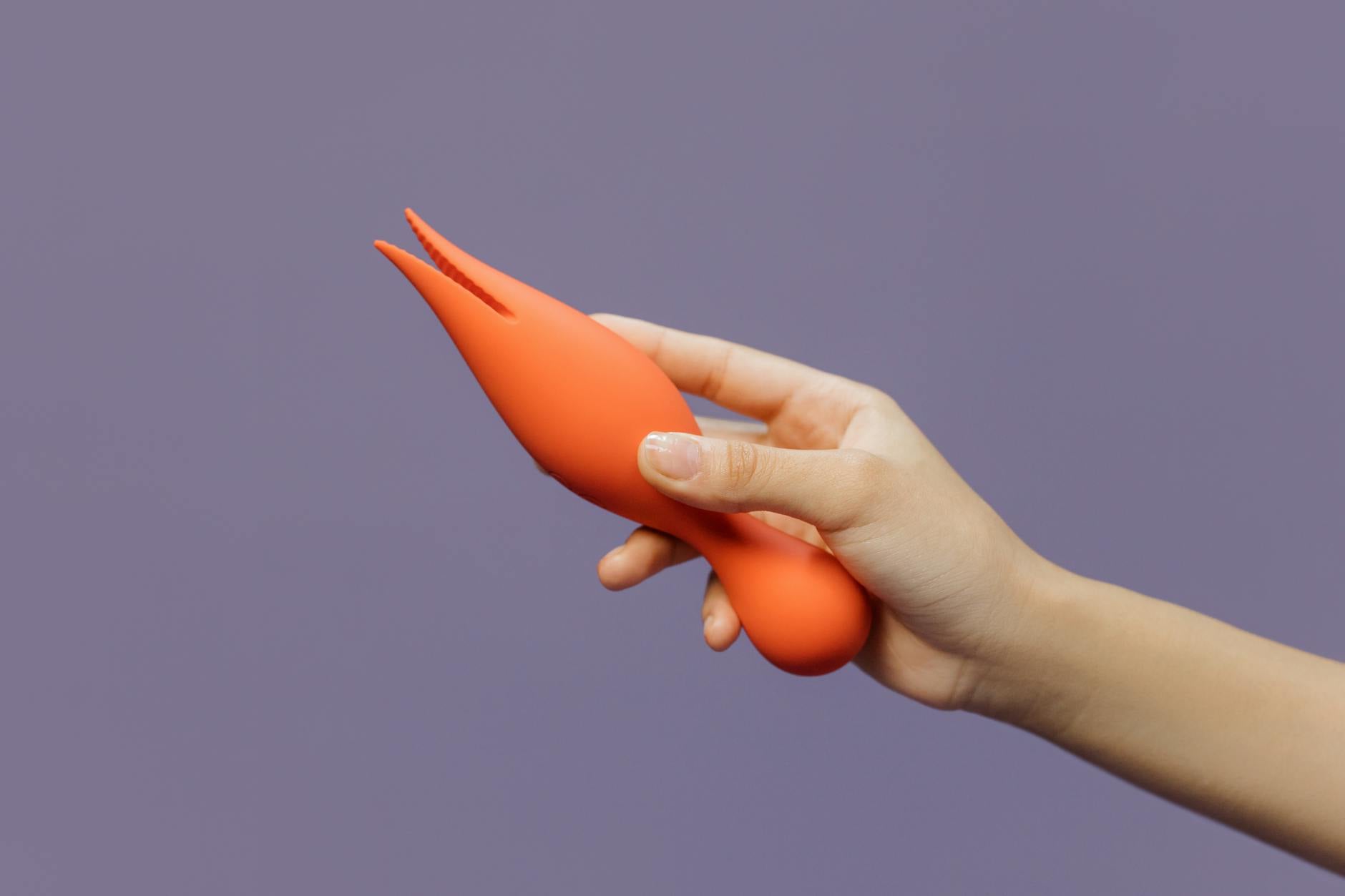
Let's be real about what vaginismus actually does
If you have vaginismus or chronic pelvic floor tension, you already know: your body tightens up at the thought of penetration. The muscles clench involuntarily. It's not a choice, not a mental block, and it's definitely not something you can just relax out of through willpower. Your nervous system has learned that penetration equals threat, and it's doing its job by bracing against it.
The problem is, that protective mechanism also locks you out of pleasure. Many people with vaginismus or pelvic tension assume they can't use sex toys at all. They're wrong. A lemon vibrator and other clitoral stimulation tools can actually become part of the rewiring process.
How pelvic tension rewires your pleasure pathways
When your pelvic floor muscles stay chronically clenched, three things happen. First, the muscles themselves become less flexible and less responsive to arousal signals from your brain. Second, your nervous system gets stuck in a pain cycle. Penetration happens or is anticipated, muscles tighten, that triggers pain, muscles clench harder in response. Third, you start avoiding sexual situations entirely because the anticipatory anxiety alone becomes exhausting.
Here's the part that matters: clitoral pleasure doesn't require penetration or even deep pelvic floor engagement. A lemon vibrator delivers stimulation to the clitoris and external vulva, which are covered in their own nerve endings. That stimulation can happen without triggering the protective clenching response that penetration does.
This is why air pulse technology like the kind in a lemon clitoral vibrator works particularly well for people with vaginismus. The sensation is external, noninvasive, and can actually help retrain your pelvic floor to associate arousal with relaxation instead of tension.
Why external clitoral stimulation is different
Your clitoris has about 8,000 nerve endings concentrated in a small area. A lemon vibrator or similar suction vibrator engages those nerves directly, which triggers pleasure and blood flow. That arousal response can gradually teach your pelvic floor muscles to relax instead of clench.
This is called somatic (body-based) nervous system rewiring. You're essentially training your nervous system through repeated positive sensations that arousal is safe. That's not pseudo-science. That's how trauma-informed pelvic floor physical therapy works. Many pelvic floor therapists actually recommend adding clitoral vibrator use to treatment plans for this exact reason.
The key difference is this: penetration involves depth, which engages muscles that are already in defensive mode. External clitoral stimulation with a lemon vibrator activates pleasure sensors without demanding anything from the muscles that are holding tension.
How to actually use a lemon vibrator if you have pelvic tension
Start completely clothed. Seriously. Let your nervous system see the toy without any expectation attached. Hold it. Look at it. It's an object. It can't hurt you. Let that sink in for a few days if you need to.
When you're ready, use it over your underwear or pajama bottoms. The fabric creates a buffer. Turn it on at the lowest setting (patterns 1-2 on a Hello Nancy lemon vibrator). The sensation should feel interesting, not intense. You're not chasing an orgasm. You're introducing your nervous system to a new type of touch.
Breathe. This matters more than you think. If you notice yourself holding your breath or bracing, pause. Your pelvic floor holds tension when your nervous system is in fight-or-flight mode, and breath regulation is the fastest way to toggle that off.
Once you're comfortable over underwear, you can progress to direct contact if you want to. But only if it feels good. Some people with vaginismus never need penetrative sex to be satisfied, and that's completely fine. A lemon vibrator can be your full sexual practice, not just a stepping stone to something else.
The role of external tools in pelvic floor physical therapy
If you're working with a pelvic floor physical therapist (which I recommend), tell them you want to add a clitoral vibrator to your routine. A good therapist will integrate it into your treatment plan. They might suggest specific patterns on your lemon vibrator that work with your nervous system retraining, or they might recommend timing it with other exercises.
The therapeutic benefit isn't magical. It's measurable. Repeated exposure to positive sensation in the pelvic region helps your nervous system update its threat assessment. What once signaled danger (arousal, touch, muscle engagement) gradually registers as safe. That's how rewiring happens.
What happens to your nervous system over time
With consistent, pressure-free clitoral stimulation, your arousal responses shift. The parasympathetic nervous system (rest-and-digest mode) becomes more available. Your pelvic floor, no longer stuck in constant guard mode, gradually regains flexibility. Orgasms often become possible for the first time, or return after years of absence.
This isn't quick. You might need weeks or months of regular use before you notice a shift. That's normal. Your nervous system spent a long time learning that penetration equals pain. It takes time to learn something different.
For some people, the shift is profound. They go from not being able to insert a tampon to having pain-free penetrative sex. For others, the real win is feeling pleasure at all. Both are victories.
When to get professional support alongside this work
A lemon vibrator is a great tool, but it's not a substitute for professional pelvic floor physical therapy if your vaginismus is severe. A trained therapist can assess whether there's muscle tension, nerve sensitivity, or nervous system dysregulation happening. They'll know what to treat first.
You might also benefit from talking to a sex therapist or trauma-informed therapist, especially if your pelvic tension is rooted in past trauma or anxiety. These professionals can work alongside pelvic floor PT to address both the nervous system component and any psychological factors.
The combination works. Clitoral vibrator use, pelvic floor physical therapy, nervous system regulation, and sometimes talk therapy. Not all of these are necessary for everyone, but getting an assessment helps you know where to start.
The practical timeline and patience
Week one: Get used to the toy existing. No pressure for anything to happen.
Weeks two to four: Introduce it over underwear, lowest setting, a few minutes a few times a week.
Weeks four to eight: If it feels good, progress to direct contact. Stay at low intensities.
Month two and beyond: You might notice arousal building differently. That's your nervous system updating. Orgasms might become possible. They might feel different than you expected. That's all normal.
If pain or intense anxiety shows up at any point, pause. You haven't failed. You've identified that your nervous system needs more support. A therapist can help you work through what triggered it.
Honestly, the most important thing is removing the timeline. You're not racing toward penetrative sex. You're rebuilding your relationship with your own pleasure. A lemon clitoral vibrator is just one tool in that process.
FAQs about lemon vibrators and pelvic tension
Can a clitoral vibrator make vaginismus worse?
No, not if you're using it the way we've described. External clitoral stimulation doesn't trigger the same protective response as penetration because it doesn't activate the muscles that are already in defensive mode. That said, if you've experienced trauma, sudden intensity or pressure can be triggering. Start slow, keep it low-intensity, and pause if anything feels alarming. Your body's signals matter.
How long does it take for a lemon vibrator to help rewire pelvic tension?
It varies wildly. Some people notice shifts in arousal within weeks. Others need months. The nervous system learns through repetition, so consistency matters more than intensity. Using a lemon vibrator a few times a week will get you better results than intense use once a month. Your nervous system is gradually learning new associations. That takes time.
Should I use a specific lemon vibrator pattern if I have vaginismus?
Start with the simplest, gentlest patterns (1-3 on a lemon vibrator). As your nervous system relaxes and arousal becomes easier, you can explore different patterns. Some people find that pulsing patterns feel more natural than steady vibration, but that's individual. Pay attention to what your body responds to, not what you think should work.
Is it normal to not orgasm while using a lemon vibrator with pelvic tension?
Completely normal. Your pelvic floor tension often comes with arousal that doesn't peak into orgasm. That doesn't mean the tool isn't working. It's working if your nervous system feels safer, if arousal is easier to access, if pain decreases. Orgasm might come later. Don't make it the goal.
Can I use a lemon vibrator if I'm also in pelvic floor physical therapy?
Yes, and you should tell your therapist about it. They might have specific recommendations about timing, intensity, or patterns that complement your treatment. Some therapists ask clients to use vibrators as part of their home practice routine. Others might suggest waiting until a certain point in treatment. Either way, transparency helps them support your progress.
What if penetration still hurts even after using a clitoral vibrator regularly?
That signals that you need pelvic floor assessment from a specialist. Pain during penetration can come from several sources: muscle tension, nerve sensitivity, connective tissue restrictions, or past trauma. A vibrator helps rewire the nervous system's response, but it doesn't address physical restrictions. A pelvic floor PT can. They work together, not as alternatives.
The actual reality
Vaginismus and chronic pelvic tension are real. Your body's protective response is real. But your capacity for pleasure is also real, even if it looks different than you expected. A lemon vibrator or other clitoral stimulation tool can be part of how you reclaim that. It's not a magic fix. It's a tool that helps your nervous system learn that pleasure is possible without pain.
If you want to explore this more, read about how pelvic floor physical therapy approaches nervous system rewiring. Talk to a therapist who specializes in this. And give yourself the grace to move slowly. Your body has been protecting itself. Retraining takes patience. You're worth the time it takes.