When your body feels like it belongs to someone else
Let's be real. You're having sex. Your partner is present, engaged, maybe even tender. But you're watching yourself from three feet above the bed. Your mind is narrating what should be happening instead of experiencing what's actually happening. Your body is there. You are not.
This is dissociation, and it's wildly more common than anyone talks about. In my practice, I see it in partners who've experienced past trauma, in people whose nervous systems learned early to check out when things got intense, in those navigating relationship rupture who've lost the thread of feeling safe in intimacy. The body goes numb. Sensation stops mattering because sensation stopped feeling like it belonged to you.
The trap is that willpower doesn't fix dissociation. Telling yourself to "be present" or "focus on the feeling" doesn't rewire your nervous system. You need a tool that bypasses the thinking mind entirely and speaks directly to sensation, to the body's own intelligence.
Lemon vibrators work for this reason. Here's how.
Why dissociation kills pleasure in the first place
When your nervous system learned to protect you by leaving your body, it became very good at that job. Even now, even when you're safe, the system doesn't automatically switch back on. It needs permission and proof. It needs sensation so strong and so specifically pleasurable that your brain literally cannot maintain the dissociative distance.
This is not a psychological problem that needs a psychological solution. This is a nervous system problem that needs a nervous system solution. Your vagus nerve, which governs your parasympathetic (safety) response, speaks in the language of sensation, not words.
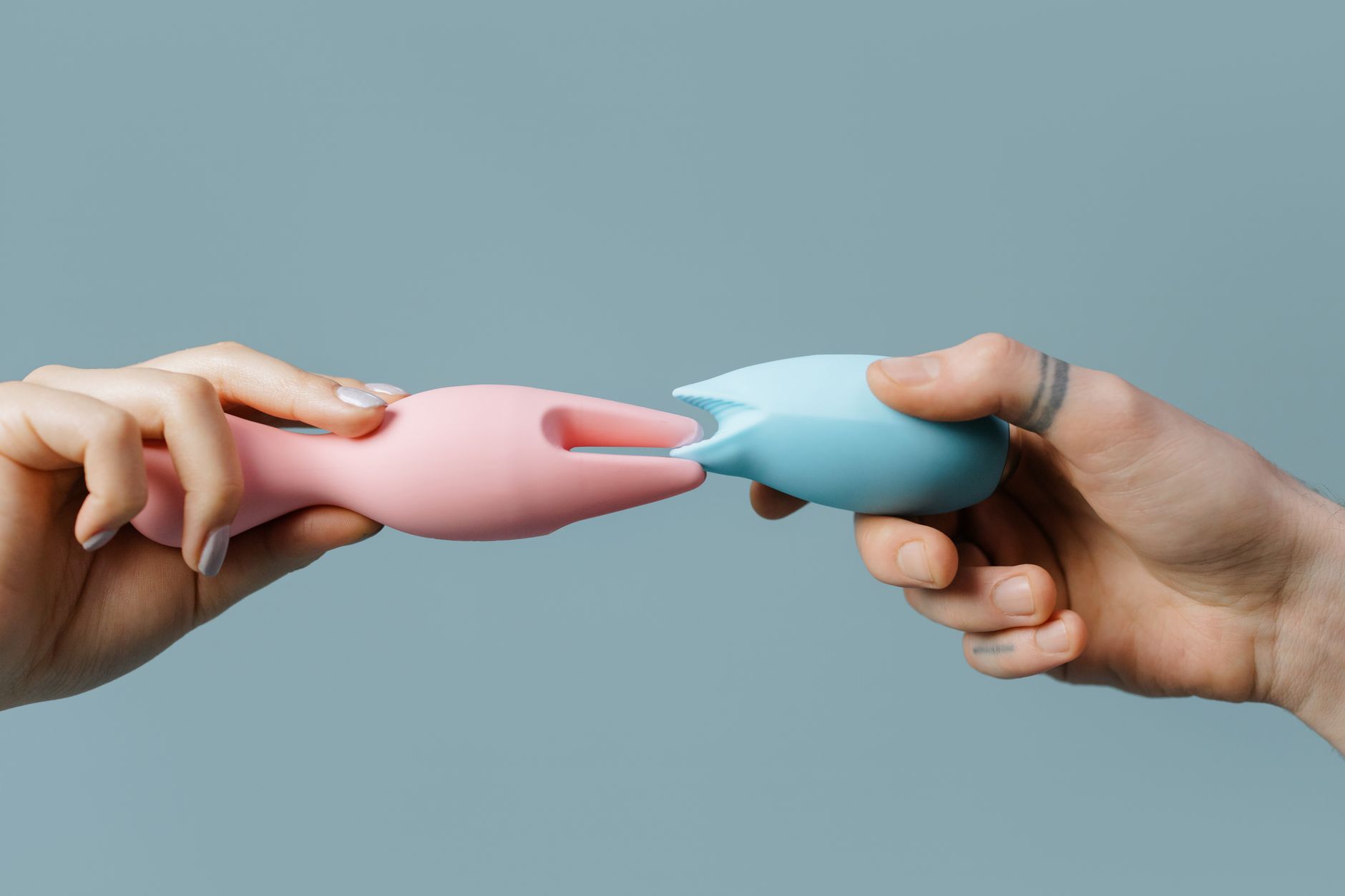
Air pulse lemon vibrators like the Lem do something traditional vibration doesn't. They create rhythmic stimulation that's intense without being invasive. The suction sensation activates different neural pathways than direct pressure. Your clitoris has 8,000 nerve endings, and suction wakes up the ones that direct vibration might bypass. The result: sensation becomes so specific and so present that dissociation becomes physically impossible.
How the Lem rewires your nervous system without therapy-speak
There are three ways lemon clitoral vibrators help your body trust being home in itself again.
First, they're specific enough to demand attention. A diffuse vibration is easy to float above. Suction is not. The rhythm and intensity require your attention because your nervous system registers it as new, novel, and importantly, controllable. You choose the pattern, the intensity, the pace. Control rebuilds safety.
Second, they interrupt the dissociative loop. Your brain was taught that intensity means danger, so it left. When you experience intense pleasure that comes with zero threat (because you're alone, or with a trusted partner, and you're in control), the neural pathways that fire together start to rewire. The next time intensity arrives, your system has a new reference: pleasure without danger.
Third, they make pleasure local. Dissociation is often a full-body thing. Your mind left because your body was unsafe. Lemon vibrators concentrated on the clitoris create a "landing pad." Sensation becomes real and localized instead of abstract and scattered. When you're rebuilding trust in your body, that specificity matters enormously.
The practical reality: how to actually use a lemon vibrator for reconnection
If this is your situation, here's what works.
Start alone. Full stop. There's no pressure, no performance, no partner's needs to consider. Spend 10 minutes exploring the lowest settings of a lemon vibrator. Not for orgasm. For sensation. Notice where you feel it, how your breath changes, what the rhythm does to your nervous system.
Many people rebuilding intimacy after dissociation find that lower settings actually feel safer because they don't trigger the intensity alarm in your nervous system. You're not trying to reach a goal. You're building a conversation with your body.
When you're ready to include a partner, communicate exactly what you're doing. "I'm learning to feel sensations again. I might zone out, and that's okay. Can you just be here with me without doing anything?" Most partners, when they understand what's actually happening, become genuinely supportive. What looks like "she's not into it" is actually "her nervous system left the room." Knowing the difference changes everything.

Photo by cottonbro studio on Pexels
When dissociation is a symptom of something bigger
I want to be clear about something. Dissociation during sex can be a trauma response, a symptom of depression, a sign of relationship disconnection, or a nervous system pattern that started in childhood. A lemon vibrator is not a substitute for therapy if that's your situation. But it can be a brilliant complement to it.
Work with a trauma-informed therapist if you have the access and resources. Full stop. What a vibrator does is give you a tool to practice being present in real time, which is foundational work. Therapy helps you understand why you left. The vibrator helps you practice staying.
They work together. Neither one alone is the whole solution.
The timeline you should expect
Most people notice a shift within 3-4 weeks of consistent solo practice. Not because they're "cured," but because their nervous system starts learning that sensation with self-directed pleasure equals safety. After that, the progress depends entirely on what caused the dissociation in the first place and how much support you have.
Some folks rebuild intimate presence within a few months. Others take longer because their system learned to leave for good reasons and needs time to trust the new story. Be patient with the timeline. Your body is protecting you. That protection is smart, even when it's no longer necessary.
The moment when you know it's working
You'll feel it before you can name it. One time, mid-pleasure, you'll suddenly realize you're here. Your mind isn't watching from above. You're in your body feeling the sensation as it happens. The moment passes, sometimes the dissociation returns, but you've just proved to your nervous system that presence is possible.
That's the breakthrough. Not becoming "fixed." Becoming possible again.
People also ask
Can dissociation during sex be treated without a vibrator?
Yes, but it takes longer and works best with professional support. Therapy, especially somatic or trauma-informed approaches, helps retrain your nervous system. Breathing exercises and grounding techniques help. But adding a specific sensory tool like a lemon vibrator accelerates the process because sensation speaks to the nervous system faster than words do.
Is dissociation always trauma-related?
No. Dissociation can stem from ongoing relationship disconnection, depression, chronic stress, or a nervous system pattern that started in childhood for reasons you might not even remember. The cause matters for full healing, but the treatment strategy is the same: rebuild the nervous system's ability to feel safe in intensity.
If I use a lemon vibrator for reconnection, will my partner feel like it's a replacement for them?
It depends on communication. If you frame it as "I'm doing solo work to rebuild my capacity for presence," most partners understand. If you add it to partnered sex without explaining, they might feel sidelined. Have the conversation first. Say what's actually true: "I'm learning to be more present for you and for me." That's not a threat. That's healing.
How long does it take to feel less dissociated during partnered sex?
Depends on the root cause and how consistently you practice solo reconnection. Most people see a shift in 4-8 weeks of regular practice. Full integration takes longer, sometimes months. Think of it like rebuilding a muscle. You can't expect to run a 5K after one week of training.
What if I'm dissociated and also have low libido?
They often go together. When your body doesn't feel like yours, desire doesn't feel like yours either. Start with sensation practice alone. As your nervous system learns that presence is safe again, desire often follows naturally. You might also explore how lemon vibrators help when arousal takes longer because the reconnection process requires patience.
Should I tell my partner I'm using a vibrator to rebuild intimacy?
Absolutely. Secrecy around this work reinforces the disconnection. A partner who loves you will want to support your healing. You don't need their permission, but you do need honesty. Try: "I'm working on being more present in my body. I'm using a lemon vibrator to practice feeling sensations more clearly. This is for us, not against us."
The real promise
Rebuilding intimacy when you're dissociated is not about reaching some perfect state of constant presence. It's about proving to yourself that presence is still possible. That your body is safe. That pleasure can belong to you again instead of feeling like something happening to you.
A lemon clitoral vibrator is one tool for that proof. It's not the only tool, and it's not magic. But it works because it speaks to your nervous system in its own language: sensation, control, and pleasure without performance. Those three things, practiced consistently, rebuild the bridge between your mind and body faster than anything else I've seen.
Your intimate life is worth rebuilding. Your presence in your own body is worth fighting for. Start small, be patient, and trust that your nervous system knows how to come home when it's safe enough to do so.