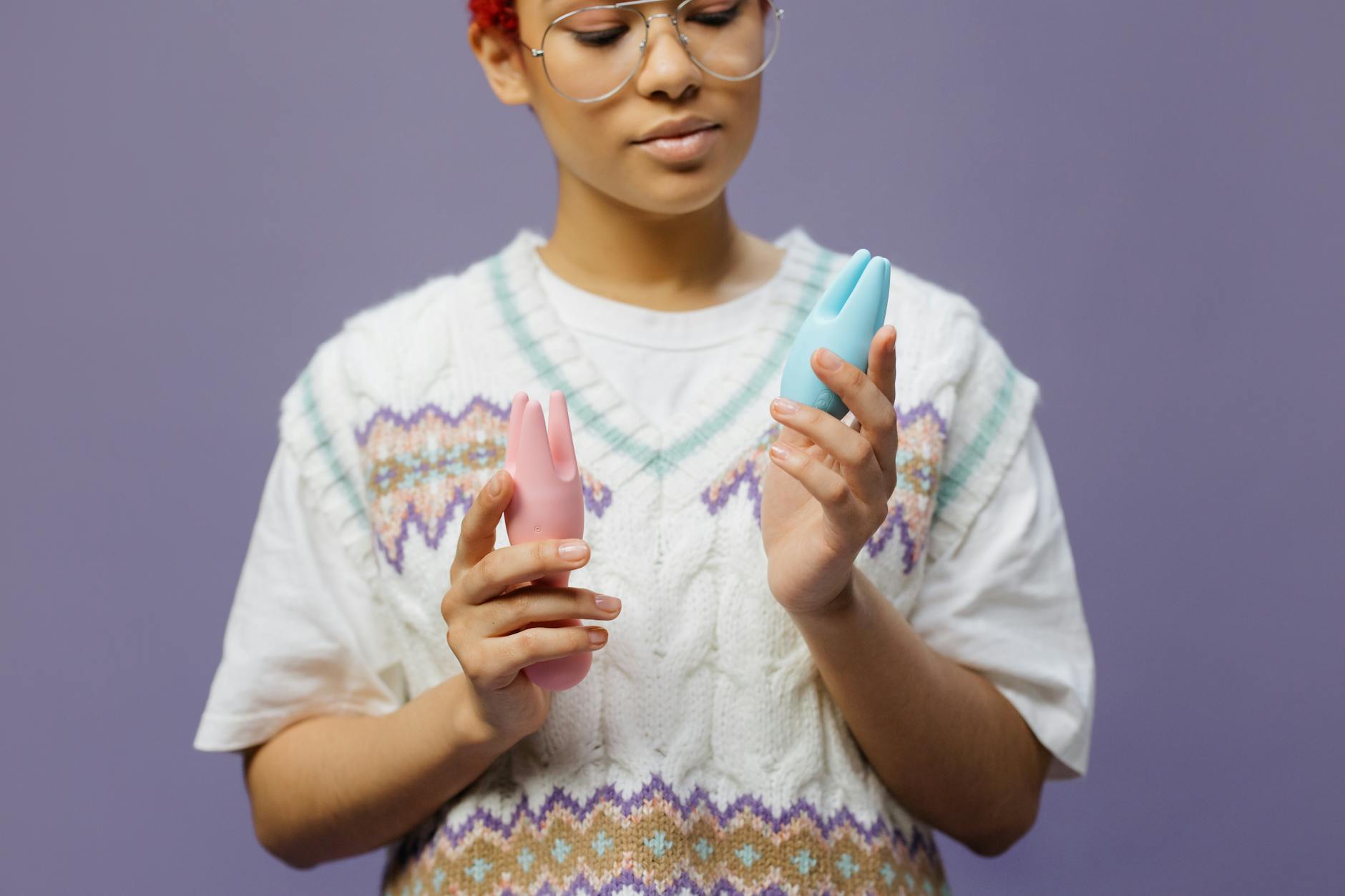
Let's talk about what happens when desire comes back
You spent two years. Maybe five. Maybe longer. Your body just. Wasn't. Interested. Not because anything was broken. Maybe it was stress, depression, medications, a relationship that had flatlined, or just the accumulated weight of life. And then one day, something shifts. A spark returns. Your body starts sending signals again. You notice attraction. You feel heat.
And now you're terrified.
Not because desire is bad. Because you've been absent from pleasure for so long that your body feels like unfamiliar territory. You don't know how to start. You worry you'll do it wrong. You're scared that if you try and it doesn't work, the numbness will swallow you again.
Here's what I tell clients when they come to me with this exact fear: rebuilding pleasure is not the same as building it the first time. You have history. You have a body that remembers sensation, even if that memory is buried. And you have patience now. That matters.
Lemon vibrators are specifically designed for this moment. They're gentle on the way in, responsive on the way through, and honest about what your body can actually feel. Let me walk you through how to use them when you're waking up again.
Why the return of desire is not the same as instant arousal
Here's the thing nobody tells you: desire and arousal are not the same feeling. Desire is the thought. Arousal is the body's response. You can want something without your body being ready to deliver. And this gap is exactly where people get stuck when pleasure is returning.
After months or years of low desire, your nervous system learned that sex wasn't happening. It stopped preparing. Your tissues, your blood flow, your lubrication, your muscle tone around the clitoris. All of that got quiet. Now that your mind is interested again, your body needs time to remember how to wake up.
This is not a flaw. This is actually your body being protective. And working with it, rather than against it, changes everything.
Lemon clitoral vibrators work here because they meet your body where it is. They don't demand instant arousal. They're small enough to use with precision, strong enough to reach tissue that's been sleeping, and designed with textures that remind your nervous system that pleasure is safe.
The first three times: permission over performance
When you're bringing desire back after a long absence, the first thing to eliminate is the pressure to feel something specific. Not "I should have an orgasm." Not "My body should respond like it used to." Just. Exploration. Information gathering.
Set a time when you're alone, without interruption. Not when you're already in bed trying to make something happen. A dedicated 20 or 30 minutes when there's zero expectation attached.
Start without the lemon vibrator. I mean it. Just your hands. Warm water in a shower, or your hands on dry skin, or both. Notice what your body is doing. Where do you feel warmth? Where do you feel nothing? This is data, not judgment.
The second time, introduce the lemon vibrator. Don't go to the highest intensity. Start at level 1 or 2. Let your body get used to the sensation. This is not meant to create an orgasm. It's meant to say: hey, nervous system, this is okay. This is safe.
The third time, you might explore intensity a bit more. Or you might not. The point is that you're building a baseline, not chasing a finish line.
What to expect when sensation is returning unevenly
Here's something that surprises people: when pleasure comes back after a long pause, it doesn't come back evenly. One day your clitoris feels responsive. The next day it feels distant. Some spots feel electric. Others feel muted. You might have an orgasm that rocks your world and then nothing for three days.
This is completely normal. Your nervous system is recalibrating. Your tissues are relearning sensitivity. Your brain is building new pathways.
The lemon vibrator helps here because the suction pattern is different from what you might remember from other toys. It doesn't rely on constant direct pressure. It works with your tissue in a way that feels less aggressive when sensation is fragile and more satisfying when sensation is ready to build.
If intensity feels overwhelming, use the lower settings. If nothing is happening after 15 minutes, stop. Your body will let you know when it's ready to go deeper. Pushing past that just teaches your nervous system that pleasure isn't trustworthy.
Building a solo practice that works for your timeline
One of the biggest mistakes I see is people trying to move too fast from "just exploring" to "I should be having intense orgasms with a partner." That's a lot of ground to cover.
Instead, build a solo practice first. This does three things. One, it teaches your body that pleasure is reliable and under your control. Two, it builds your own arousal baseline so you know what works for you before you're managing someone else's experience. Three, it gives you time.
Three times a week. 20 to 30 minutes. Use the lemon vibrator on patterns you actually enjoy, not patterns you think you should enjoy. Let your mind wander. Don't try to have an orgasm. Just let sensation build the way it wants to build.
Most people find that within two to three weeks of consistent solo practice, the nervous system settles. Arousal becomes more predictable. Sensation becomes clearer. The fear that desire might vanish again starts to loosen.
The partner question: when to bring someone else in
If you have a partner, here's the conversation that needs to happen before you invite them into this process. It's not "I want to have sex again." It's "My body is waking up and I'm learning what that feels like. I might want company with that at some point, but right now I need to do this alone first."
That conversation does two things. It manages expectation and it protects your process. Your partner doesn't get to feel like this is about them. It's not. It's about your nervous system rebuilding trust in pleasure.
When you do decide to include a partner, having a solo practice already established means you know what you like. You know what your body needs. That changes the dynamic from "please figure me out" to "here's what I've learned about myself." Your partner becomes someone who's joining you in something you already understand, not someone you're relying on to unlock you.
With a partner present, the lemon vibrator also shifts the experience. Some couples use it together, with a partner controlling it. Others use it as part of foreplay alongside manual touch. The key is that you already know how you like it to feel on your body, so you can actually direct the experience instead of hoping it works out.
What to do if pleasure plateaus or stalls
Sometimes desire comes back and builds beautifully for three weeks and then hits a wall. Everything feels muted again. The intensity doesn't land. Orgasms stop happening or feel less intense.
This usually means one of three things. One, your nervous system needs rest. You've been exploring actively and it's asking for a pause. Two, you're starting to perform again instead of just feeling. The pressure to keep building momentum is creating tension. Three, there's an emotional thing underneath that wants attention.
If it's the first, take a week off. Not forever. Just a week where you don't use the lemon vibrator or engage sexually. Then try again.
If it's the second, get honest about why you're doing this. Is it for you? Or are you trying to prove something to yourself or your partner? Go back to the earlier stages. Remember that exploration has no endpoint.
If it's the third, this is where having support matters. A therapist, a trusted friend, or speaking with a partner about what's underneath can shift things. Sometimes pleasure stalls because there's grief or anger or fear that hasn't been processed. That's work, but it's important work.
The reintroduction to partnered pleasure
When you're ready to bring a partner into your pleasure practice, the lemon vibrator can actually make that transition easier. Here's why: it removes the pressure for your partner to "do it right." You're not relying entirely on their hands or their body. You've got a tool that works.
You might start by using it on yourself while your partner watches. This is not performance. It's permission. You're saying: here's what I like. Here's what my body responds to. That knowledge makes everything that comes after clearer.
Some couples find that incorporating a clitoral vibrator makes pleasure more accessible when arousal has been absent for a long time. You're not fighting against years of numbness. You're working with your body's actual capacity right now. That's not a crutch. That's pragmatism.
If you're dealing with a partner who has different desires, having your own lemon vibrator practice means you're not negotiating your pleasure. You're informed about what works for you. That conversation becomes much easier.
Common fears and what's actually true
I should spend some time here on the fears that come up when pleasure is returning after a long absence. Because the fears are real and they matter.
"If I start using a vibrator, will I become dependent on it?" No. A lemon vibrator is a tool, like a vibrator is a tool, like lube is a tool. Your body doesn't forget how to respond to other kinds of touch just because you introduced one. In fact, most people find the opposite. Once their nervous system remembers that sensation is possible, it becomes responsive to more kinds of touch.
"What if the pleasure leaves again and I'm devastated?" That's the real fear, and I want to be honest about it. Sometimes desire does dip again. But here's what changes: you now know that it can come back. You've proven to yourself that your body is capable. That knowledge doesn't erase the fear but it does change the story from "this is forever" to "this comes and goes and I can handle that."
"Am I broken if it takes me two months instead of two weeks to rebuild pleasure?" No. The timeline is yours. Some people need three weeks. Some need three months. Your body sets the pace. Working against that pace is what actually stalls the process.
FAQ
What if I feel numb even when using the lemon vibrator?
Numbness when pleasure is returning is often about pacing, not about your body's capacity. Try using the vibrator for shorter sessions, 10 to 15 minutes instead of 20 to 30. Give your nervous system smaller bites of stimulation. Also, make sure you're not in a rush to feel something. The pressure to experience sensation often produces the opposite. Some people find that removing any goal beyond just exploring for 10 minutes makes sensation more accessible.
Can I use the lemon vibrator while with a partner if we haven't had sex in a long time?
Absolutely. In fact, many couples find that starting with external clitoral stimulation together when desire is returning helps rebuild connection without the pressure of penetration. The lemon vibrator can be part of foreplay, or the main event, or something you use solo while your partner is present. The key is that you both know it's not a replacement for intimacy. It's a tool within intimacy.
How do I know if I'm using the lemon vibrator too much?
If your clitoris feels sore or desensitized after use, you're probably overdoing intensity or duration. Back off. Your body will tell you when it needs a break. Most people find that using a lemon vibrator three to four times a week is sustainable without numbness. If you're using it daily and sensation is fading, scale back.
What if my partner is uncomfortable with me using a vibrator?
This is worth a direct conversation, not an argument. Some partners worry that toys mean they're not enough, or that they're being replaced. The conversation is about reassuring them that clitoral pleasure returning is about your nervous system healing, not about them. If your partner can't move past that discomfort, that's a different conversation about whether you both want the same thing.
How long before I can expect orgasms to come back?
It varies wildly. Some people have an orgasm within the first week of using a lemon vibrator after a long absence. Others take two or three months. The timeline doesn't predict anything about your capacity. It just means your nervous system works at its own pace. The best approach is to remove the expectation of orgasm and focus on sensation. Orgasms usually follow when the pressure is off.
Is there a difference between using the lemon vibrator solo versus with a partner?
Yes. Solo, you're building your own data about what your body likes. With a partner, you're inviting someone into that knowledge. Solo feels safer when pleasure is returning because there's no one to perform for. With a partner, there can be vulnerability but also deeper connection if both people understand that this is about rebuilding trust in sensation, not about proving anything.
You're exactly where you need to be
When pleasure comes back after a long absence, it doesn't announce itself loudly. It's quiet. It's fragile. It asks for patience. Using a lemon vibrator during this time isn't about rushing toward intensity. It's about giving your nervous system permission to wake up slowly, safely, and on its own timeline.
Your desire matters. Your body matters. The fact that you're choosing to rebuild pleasure is an act of self-trust. That's the foundation. Everything else follows from there.