
Let's start with what almost everyone gets wrong
Your partner wants to help. You're worried they'll feel replaced, that you'll lose the intimacy, that introducing a toy means admitting something's missing. And your partner might be worried that suggesting it makes them seem like they're not enough. Both of these things are usually wrong, and both get in the way of what could actually be really good.
Here's the thing: bringing a lemon vibrator into partnered sex isn't about fixing a problem. It's about expanding what's possible. When a partner is genuinely interested in using a clitoral vibrator together, that's usually not a sign of disconnection. It's often the opposite. It's an invitation to try something new together.
The awkwardness you feel right now? That's just the gap between how people actually have sex and how they think they're supposed to. Once you cross it, things open up.
The conversation is the whole game
Seriously. How you talk about this determines everything that comes next.
Don't lead with "I need a toy because you're not doing enough." Don't apologize. Don't treat it like you're bringing bad news. Instead, approach this the same way you'd suggest trying a new restaurant or position. Frame it as curiosity, not a critique.
Try: "I've been thinking about exploring something. I'm interested in trying a clitoral vibrator. I'd like you to be part of that." Notice that last sentence. That's the whole thing. You're not asking permission. You're not handing over control. You're naming that this matters to you and that you want them there.
If they seem hesitant, the most common worry is that they'll become unnecessary. Address that directly. "I want this with you, not instead of you. This is about us finding something new together." Then let them ask questions. People usually just need a minute to picture it.
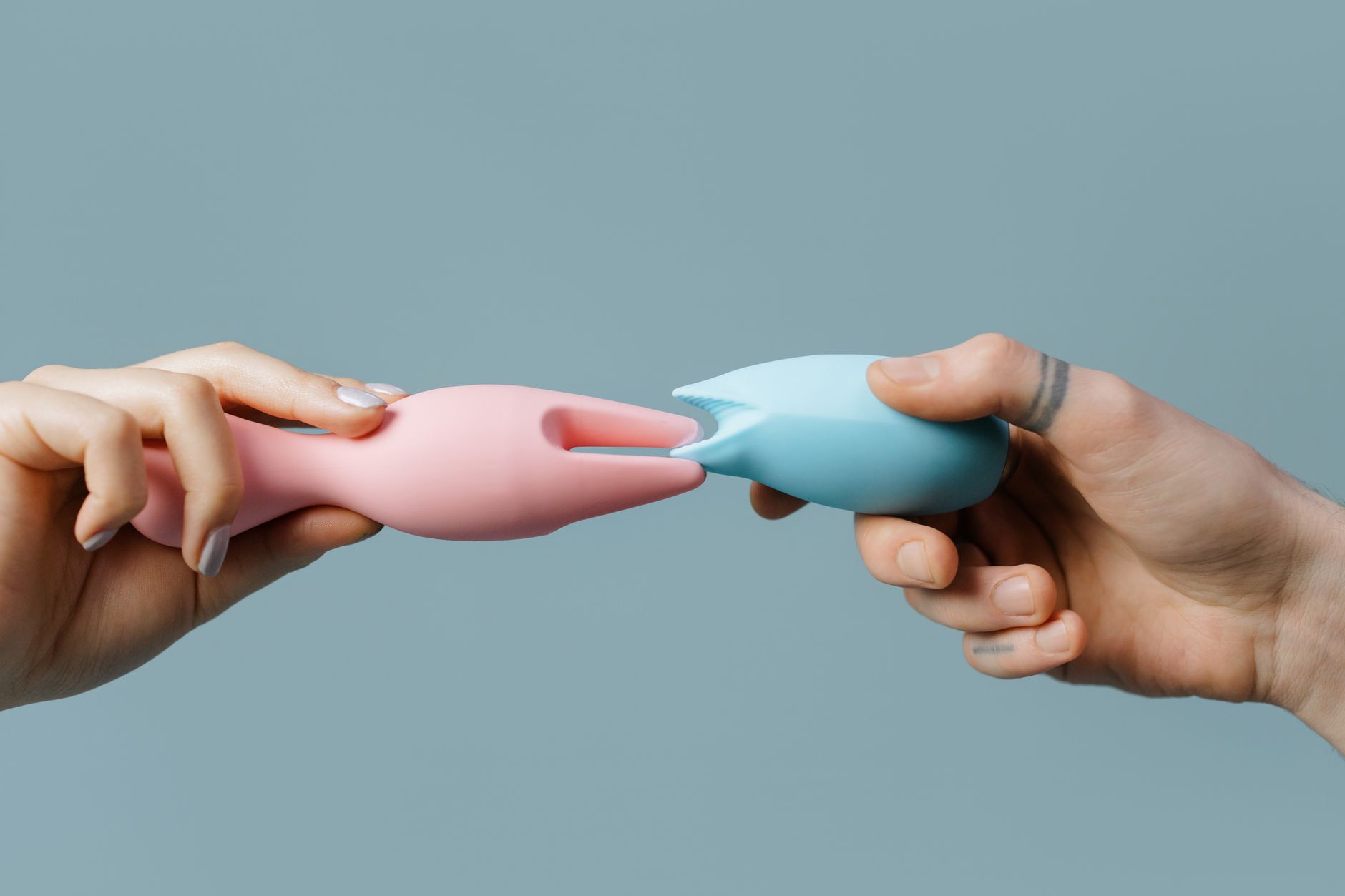
Photo by cottonbro studio on Pexels
Why lemon vibrators work so well for partnered play
Lemon clitoral vibrators are specifically designed for external stimulation, which means they work beautifully in partnered scenarios. Unlike internal toys, a clitoral vibrator like the Lem doesn't create any physical barrier between you and your partner. They can still touch you, be inside you, feel close to you. The vibrator adds sensation, not distance.
The suction design means you're not dealing with the numbing that sometimes happens with older vibration-only toys. The air-pulse technology creates a unique sensation that builds arousal differently than hand stimulation alone. For partners who want to be involved, that difference is actually an advantage. They get to watch you respond to something new. They get to be part of figuring out what works.
Many couples find that using lemon sexual toys together actually deepens the intimacy because you're both learning something about what feels good. There's curiosity instead of routine. And that curiosity is contagious.
How to actually use it together, step by step
Start with foreplay as normal. Don't skip straight to the toy. Let arousal build the way it usually does. Your partner touches you, you kiss, you get warmed up. The vibrator isn't a shortcut to pleasure. It's an addition to what you're already doing.
Introduce it slowly. Once you're aroused, have your partner hold the vibrator while they continue kissing or touching you elsewhere. This is the key moment. They're controlling the sensation, which means they can adjust the pattern or intensity based on your response. You're not managing two things at once. They're managing your pleasure, which is exactly what they want to be doing.
Set the rhythm together. Let them experiment with patterns. Some people like consistent pressure. Others prefer when the vibration builds and releases. Your partner will probably figure out faster than you what feels best because they're watching your body respond. Let them lead here. The point is that they're actively involved, not watching from the side.
Communicate in real time. "A little slower," "higher," "keep doing that." Not clinical feedback. Just simple directions. This does two things. It keeps your partner engaged because they know exactly what's working. And it keeps you present because you're not just receiving sensation. You're actively creating it together.
The position stuff (yes, it matters)
The logistics change a bit when a partner is holding the vibrator. You generally want to be in a position where they have access and can see what they're doing. That usually means you're on your back with them beside you or between your legs, or you're sitting with them behind you or beside you.
What's weirdly helpful: trying it the first time during foreplay before penetration. That way there's no logistical confusion about what's happening where. You both get comfortable with how the toy feels and how your partner handles it. Then once you're both confident, you can integrate it into however you usually have sex.
Some couples love having the vibrator on during penetration. Some find that the sensation is so strong that they prefer to use it first, build to orgasm, and then transition to other kinds of intimacy. There's no "right way." The point is that you and your partner get to figure out what works for your bodies and your dynamics.
What to do if it feels weird the first time
It probably will, at least for a minute. You're introducing a new tool. Your brain is paying attention to the mechanics instead of just dropping into sensation. Your partner might be overthinking it too. That's completely normal.
Give it three times before you decide if it's for you. The first time is about novelty and adjustment. The second time, you both know what to expect and can relax more. By the third time, you're actually in your body instead of in your head.
If it's still not working, the most common issue is that the vibration feels too intense or the angle isn't quite right. Start on a lower pattern. Adjust where your partner positions the toy. Try different patterns. Most lemon adult toys have multiple intensities for exactly this reason. You're not looking for the one perfect setting. You're looking for what feels good in your body on this particular day.
When pleasure actually gets better
Here's what I hear from couples who've navigated this successfully. At first, they use the lemon vibrator during specific moments. Over time, it becomes just part of what they do, the same way you don't think twice about a certain position or touch anymore. But the bigger shift is that they've opened a conversation about pleasure that didn't exist before.
Once you've talked about this and tried it together, it becomes way easier to talk about other things. What feels good. What you want more of. What you're curious about. That conversation is worth more than the toy itself.
When you're new to toys after a long break, there's usually some awkwardness in the beginning. The partnered version has an extra layer because you're also navigating someone else's feelings. But that's also what makes it richer. You're not just exploring pleasure. You're exploring it together.
If communication has been stalled or you're not sure how to bring this up without it feeling like criticism, that's worth addressing separately. When partner intimacy has stalled for years, a toy isn't usually the solution on its own. But it can be the permission slip you both need to start talking about what you actually want.
The practical stuff your partner should know
If your partner is going to be holding or controlling the vibrator, they need to understand the basics. Lemon clitoral vibrators are designed for external stimulation only. The suction sensation is gentler than you'd think from the description. Start on lower patterns and move up. You can pause and build anticipation. You don't have to stay on the same pattern the whole time.
Most importantly: your partner should know that using a toy together isn't a performance. They're not trying to make you orgasm in record time. They're exploring what feels good with you. That mindset shift changes everything. Suddenly it's not pressure. It's play.
People also ask
Will using a lemon vibrator together make my partner feel inadequate?
Not if you frame it right. The conversation matters. If you approach this as "I want to try something new with you," most partners feel included, not replaced. Many actually feel relieved because they now have a tool that creates a sensation they physically can't replicate with their hands. That's helpful, not threatening. The couples who struggle are the ones who sneak the toy in or frame it as a fix for what their partner isn't doing. Transparency and genuine interest in partner involvement change the whole dynamic.
What if my partner wants to use it on me but I'm not comfortable?
Then you say that. "I want to try this solo first and get comfortable with the sensation, then I'd love to explore it with you." Your partner gets to be involved in other ways. They can watch, they can touch you in other places, they can help you learn what patterns feel best and then you communicate that to them. Comfort comes first. Everything else builds from there.
Can you use a lemon vibrator during penetration?
Yes, absolutely. Some couples apply it during penetration. Others use it before or after. The positioning might shift depending on what you're doing, but the suction design of lemon clitoral vibrators works well for this because it doesn't interfere with penetration. Find the angle that works for your body and your partner's body. It usually takes a few tries to figure out, and that's fine.
What if we get bored with it?
Toys aren't meant to be endlessly exciting. They're tools. You use them when they serve something, and you don't use them when they don't. The real goal isn't the toy. It's the conversation and the willingness to try something together. Once you've had that conversation and tried it, you might use it regularly, occasionally, or not at all. That's completely fine.
How do I know if my partner is actually into this or just going along with it?
You ask. "Does this feel good to you? Are you enjoying doing this?" Simple questions. Real answers. People sometimes go along with something to make a partner happy, even if they're not into it themselves. That's usually fine for one or two times, but if you're going to make it a regular thing, it works best when both people are genuinely interested. If your partner isn't feeling it, talk about why. Maybe the approach needs to shift. Maybe it's just not their thing. Both are okay.
Is it normal to feel self-conscious when my partner is watching me use a toy?
Completely. There's vulnerability in pleasure. You're letting someone see you respond to something intensely. That takes trust, and it takes time sometimes. Start with lower intensity. Let your partner touch you in other ways while the toy is on. Build comfort gradually. Many people find that the self-consciousness fades once they realize their partner is just happy to see them feeling good.
The bottom line
Using lemon vibrators together isn't complicated, but it does require vulnerability. You have to talk about what you want. You have to let your partner into your pleasure in a more direct way. That's the hard part, not the logistics.
Once you've had that conversation and tried it, most couples find that things shift. The pleasure itself often gets better. But more than that, the intimacy deepens because you've decided to explore something together. You've said, "This matters to me, and I want you there."
That's the real point. The vibrator is just the vehicle.
If you're not sure how to start the conversation or you're dealing with deeper disconnection in your relationship, that's worth addressing. Reach out if you need guidance on how to approach these conversations with your partner.